Final Reflections
And just like that, the adventure came to an end.
The next morning, we said our goodbyes, each of us heading to our respective flights, peeling away from Cape Town in different directions. As I settled into my Delta One seat, wrapped in a plush comforter and served a perfectly cooked steak at 36,000 feet, the contrast of the past two weeks weighed heavily on my mind. Stainless steel luggage in the overhead bins, luxury watches peeking from shirt sleeves—this world, felt a universe away from the one we had just experienced. It’s always in these quiet, in-between moments—between takeoff and landing—that the weight of a journey truly sinks in.
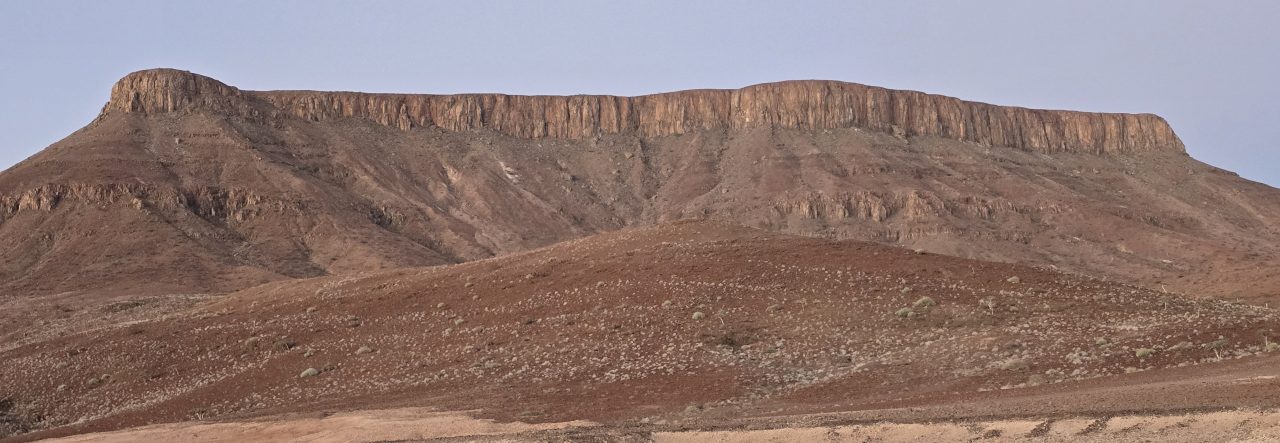
Namibia had been so much more than just a destination. It was the vastness of land that seemed to stretch endlessly in every direction, the kind that makes you feel small in the best possible way. It was the silent dunes of Sossusvlei, shaped by time and wind into golden waves. The eerie, fog-draped skeletons of shipwrecks along the Atlantic coast—each holding a forgotten story. And the parched salt pans of Etosha, shimmering in the heat, where life somehow continues to bloom against the odds.
But the real heart of the journey wasn’t just the landscapes. It was in the people we met—people like Tom, guiding us through the silence of the desert with wisdom and grace; Dessie, with stories woven from the mountains of Damaraland; and Peter, who hitchhikes 800 kilometers every few weeks just to see his family. These are the voices that echo long after the photos fade.
As the clouds floated below, I couldn’t help but feel grateful—for the adventure, yes, but more so for the perspectives it brought. For the humbling reminder that the world is bigger, deeper, and more layered than any itinerary can capture. Namibia and South Africa doesn’t just show you its beauty—it reveals its soul, if you’re willing to look close enough.
Africa has a way of humbling you. Of showing you magic in the mundane. Of revealing truths in silence, in sandstorms, in lion stares, and long drives through ancient lands.
The sheer contrast of it all—the raw, untouched wilderness and the resilience of its people—is something I’ll carry with me forever.
It may not be on everyone’s bucket list. But maybe that’s what keeps calling me back, year after year.
A Painful Contrast
One thing that never escapes you, especially when you’ve traveled through Southern Africa more than once, is the clear and persistent dichotomy between the Black and white populations — not just socially, but economically and visibly. Namibia, like South Africa, carries with it the long shadow of colonialism and apartheid. And even though decades have passed, the distribution of wealth and power tells a story that hasn’t fully changed.
In many of the places we visited — whether it was a lodge, a restaurant, or a gas station — the owners were white, often of European descent, or international expats who choose to spend their summers in Namibia, drawn by its beauty, climate, and affordability. On the other hand, the people serving meals, cleaning rooms, guiding tours, or watching over security were almost exclusively Black Namibians.
It wasn’t a surprise — I’ve seen this before — but it was still unsettling. Not because people weren’t kind or proud of their work (they were), but because it was a clear and constant reminder of how deeply entrenched inequality remains. The smiles of people like Peter in Etosha or Lindokhle in Johannesburg conceal a deeper truth — one where opportunity remains uneven, and where the legacy of colonization still shapes who owns, and who serves.
It’s one thing to marvel at Africa’s beauty — the wildlife, the landscapes, the culture — but it’s another thing entirely to recognize the systemic realities behind the scenes. It’s not just the remains of colonial architecture or the presence of German street names; it’s the everyday structures of economic power that haven’t shifted nearly as much as they should have.
This contrast — stark and often unspoken — stayed with me throughout the trip.
Thank you to the travel partners
Of course, no journey is complete without the people you share it with.
The landscapes were stunning, the wildlife unforgettable, but what truly made this trip exceptional was the crew I traveled with. In many ways, the people around you shape the experience just as much as the destination. You’re in close quarters, sharing early mornings, long drives, meals, decisions—and at times, discomfort. Compromise becomes the name of the game.
In my case, I couldn’t have asked for a better team. Nabeel, Nausherwan, and Zef each brought their own perspective, skills, and energy to the trip. Whether it was Nabeel and Nausherwan’s quiet focus behind the lens, or Zef’s infectious curiosity and razor-sharp animal-spotting skills, every moment was elevated because of them.
Not once did anyone complain about the food, the rough roads, the early starts, or the rustic living conditions. And the truth is, any one of us could’ve made the trip difficult for everyone else. But we all came in with the same mindset: to soak it all in, respect the journey, and make it count.
So to my travel crew—thank you. For the patience, the laughter, the shared awe, and for making these memories truly unforgettable.
What I’ll Never Forget
- The first sight of the Milky Way cutting across the Namibian night sky like a cosmic river—so clear, so silent, so humbling.
- Driving through the desolation of the Namib Desert, where the landscape is so vast and silent it feels like time itself slows down.
- Watching the sun rise over Deadvlei, where 900-year-old trees stood frozen in time, casting shadows on salt flats like a scene from another planet.
- Hearing about Meesha’s birth while wrapped in thick blankets, tracking rhinos at dawn in the middle of nowhere—proof that life keeps unfolding in beautiful, connected ways.
- Seeing Herman the black rhino, camouflaged beneath a tree, as we stood quietly just a few hundred feet away—our breath held, hearts pounding.
- The pride of lions lazily sprawled at Fischer’s Pan, their bellies full from a kill, indifferent to the buzzing of our cameras.
- The injured zebra, the lone tortoise, the sandstorm—moments that remind you nature isn’t curated. It’s real. It’s raw. It doesn’t always tie things up in bows.
- The laughter with friends, the shared playlists, the debates over camera settings, the quiet moments when words weren’t needed.
- The lessons from locals—Tom, Dessie, Peter. Each one taught me something different. Each one left a mark.
- Getting pulled over by Namibian traffic cops, and channeling every Karachi street-smart instinct to negotiate my way out of a “speeding” ticket.
Namibia wasn’t just a trip. It was a lesson in scale, silence, survival, and soul. And I’ll carry it with me for a very, very long time.
 The Travel Chapters