This morning, we set off for one of the most exhilarating experiences of our entire trip—rhino tracking. If you’re unfamiliar, rhino tracking is exactly what it sounds like: riding off-road in an open safari vehicle with expert guides and trackers to track the elusive black rhinos that roam the Damaraland region. It’s a unique and thrilling adventure, and Damaraland is one of the few places where these endangered creatures can still be found in the wild.
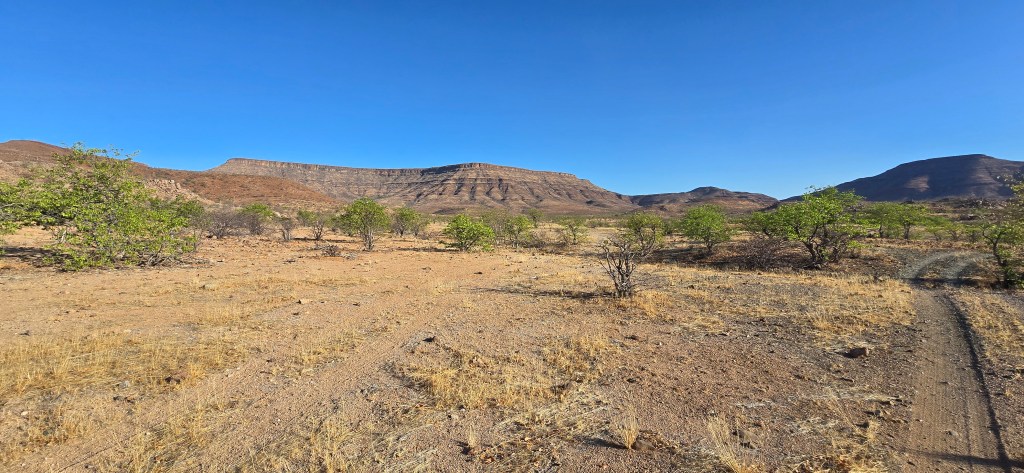
Our day began at 5 a.m., the cold mountain air biting as we wrapped ourselves in thick blankets. It was still dark when we set off, making our way through the rocky terrain of the desert in a land cruiser. Our guide, Dessie, a local from Damaraland, led us, accompanied by two trackers who were ready to spot any signs of rhinos in the vast, empty wilderness. The hour-long ride felt like a true escape into the wild, with nothing but the sound of our vehicle crunching over the gravel and the occasional bird call breaking the silence.
Meesha
As we bounced along, something unexpected happened. Despite being in one of the most remote areas on earth, our phones suddenly picked up a signal. A flurry of messages appeared in our family WhatsApp group—my niece, Meesha, had just been born! There we were, in the heart of Damaraland, making a group video call to share the moment with our family. It was a surreal experience, a reminder of how technology connects us no matter where we are in the world.

A video call with family in the middle of the Namibian wilderness, celebrating the birth of my niece, Meesha.
Herman
As we continued deeper into Damaraland, the landscape seemed to grow more wild and untamed. We were on a mission to find the elusive rhinos, and though we didn’t spot any that morning, the adventure of the journey—driving through such a vast, remote landscape—was a reward in itself. Tracking rhinos in the mountains of Damaraland is an experience you’ll never forget. It’s not just about the wildlife, but about the connection to a culture, to the land, and to a history that is still unfolding.
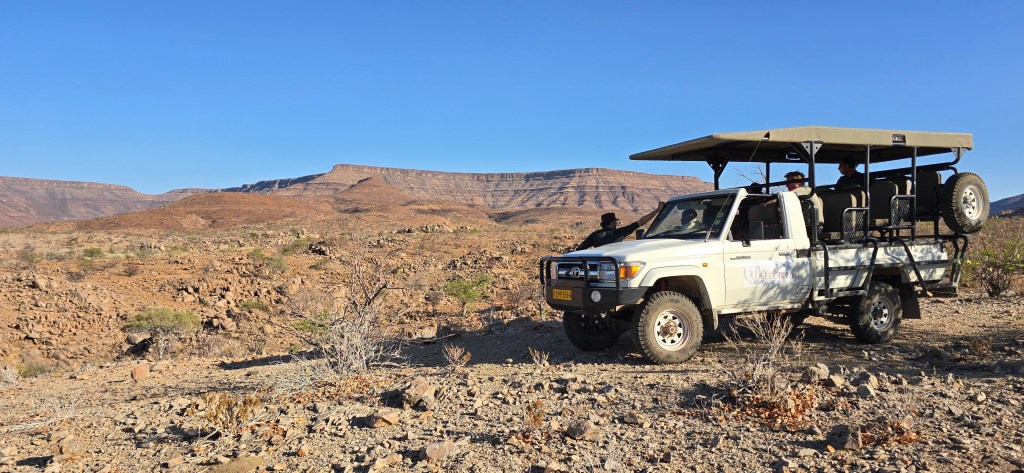
After visiting four waterholes in vain, the relentless heat of the Namibian sun started to wear on me, and my hope of spotting a black rhino dwindled. But then, something shifted. Our trackers, who had been scanning the landscape from the vehicle, suddenly climbed out and grabbed their walkie-talkies. At first, I was confused about what was going on, but Dessie, our guide, explained they were going to track the rhinos on foot. They’d follow the tracks, hoping to find one in the wild. It seemed a bit far-fetched to me—how could they possibly track down such an elusive creature in a vast desert? But, Dessie reassured us, these trackers were experts, and I put my faith in their experience.
While the trackers worked, we sought shelter from the midday heat under the sparse trees, sipping water and trying to keep cool. For over an hour and a half, the trackers worked tirelessly, and we watched in awe as they ventured deeper into the terrain. Then, suddenly, the walkie-talkie crackled to life with some static before Dessie announced that we needed to drive to the other side of the mountain. The trackers had found fresh rhino tracks—after walking a good 6-10 kilometers in the heat. We quickly started driving towards the new location.
As we approached a bend in the road, we saw the two trackers emerge from the brush. They led us to a spot where we were instructed to disembark, grab our gear, and get ready to walk. Following the rhino tracks for the final 300 feet, we moved quietly through the sand, with anticipation building at every step. Within 10 minutes, we spotted something—there, in the shade of a tree, was a massive black rhino. His color blended perfectly with the surroundings, making him hard to spot at first.
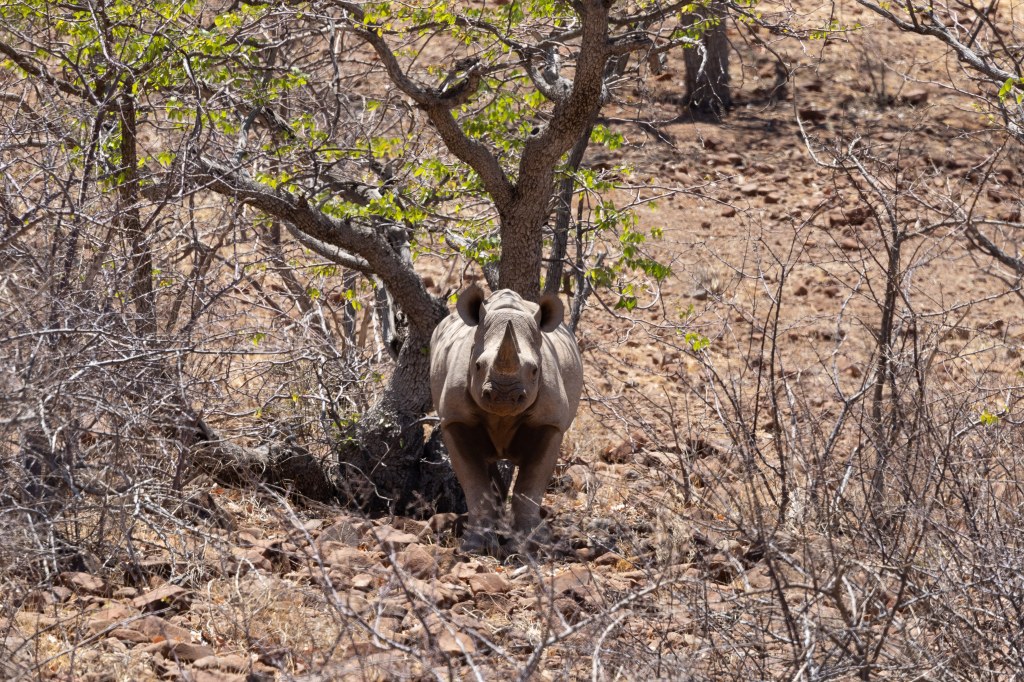
Rhinos, with their acute senses, quickly detected our presence. Herman, the rhino, shifted uneasily, standing about 1,000 feet away from us. We stood perfectly still, respecting his space, and after a few moments, he seemed to settle down. Dessie informed us that this was Herman, one of only four black rhinos in the area. Black rhinos have adapted to the harsh desert climate, but they face constant threats from poachers. The rhino’s horns are highly prized for their perceived medicinal properties, especially in some parts of Asia. Herman, like others in the area, was scheduled to be de-horned soon to help protect him from poachers.
We spent around 30 minutes observing Herman, quietly snapping photos and taking in the incredible experience of seeing such a majestic creature in the wild. It was a moment I’ll never forget, and I couldn’t help but feel grateful for the chance to witness the raw beauty of the desert.
Once our time with Herman came to an end, we headed back to the vehicle. We stopped under a large tree for a much-needed break and a delicious lunch.
Dessie
Dessie, our guide, shared some fascinating insights about the region. Growing up as a shepherd in Damaraland, he had a deep connection to the land. Damaraland is home to several indigenous tribes, including the Herero, Himba, and Nama people, each with their own unique cultures and traditions. While English is the official language of Namibia, many locals, especially in rural areas like Damaraland, speak a second language—often a mixture of indigenous languages and German, which is still widely spoken because of Namibia’s colonial past. Dessie’s own story was shaped by the arrival of German missionaries who introduced the first schools in the area. He told us that kids could attend school at any age, and he himself had attended the mission school, spending three months at a time there with a week off in between.
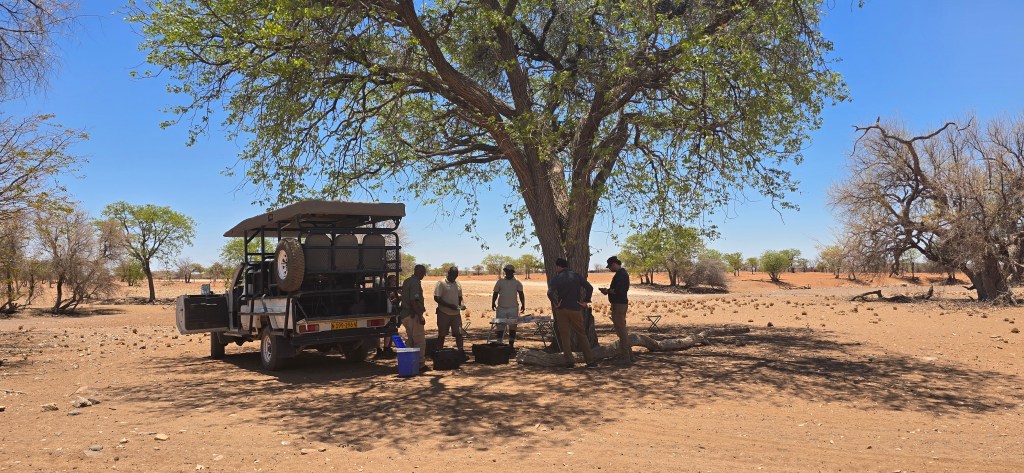
What struck me the most was how Dessie explained the local economy: while Namibia has developed in many ways, much of life in Damaraland still relies on the barter system. Goats and cattle are considered valuable, and January marks the peak of the trading season when people come together to exchange goods. It’s a reminder of how traditional practices still shape daily life in such a remote part of the world.
Dessie was also keenly interested in us, asking about our backgrounds and what had brought us to Namibia. It’s moments like these—conversations with locals—that really deepen the travel experience. The impact of colonization, and the profound ways it still affects communities today, became so apparent in these conversations. Dessie’s curiosity and openness reminded me of how quickly the world is changing and how important it is to learn from those who have lived through such transformation.
Dessie took this opportunity to share a story from his past—one that highlighted the deep connection the local people have with the land.
“When I was a boy, I worked as a shepherd in these very mountains,” Dessie began, his voice softening as he recalled his past. “One day, I saw a black rhino in the distance. It was a huge creature, alone in the wild, and I knew I had to keep my distance. I had never seen anything like it. The way it moved—it was like the desert belonged to him. That day, I learned a lesson I’ll never forget: the animals of this land are as wild and free as the land itself. I learned to respect them.”
After lunch, we made our way back to Grootberg Lodge, where we spent the afternoon relaxing by the cool pool. The contrast between the hot desert sun and the refreshing water was perfect after such an exhilarating morning.
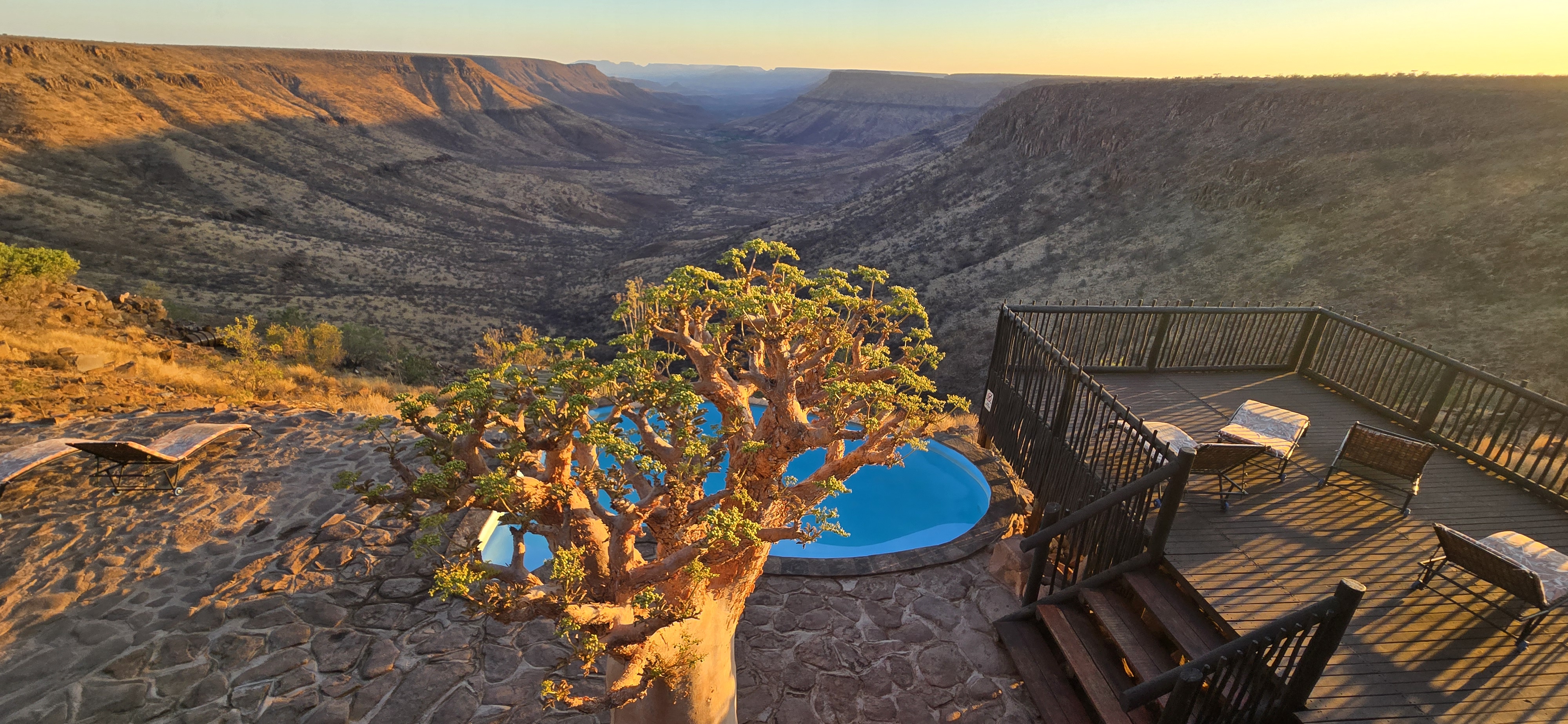
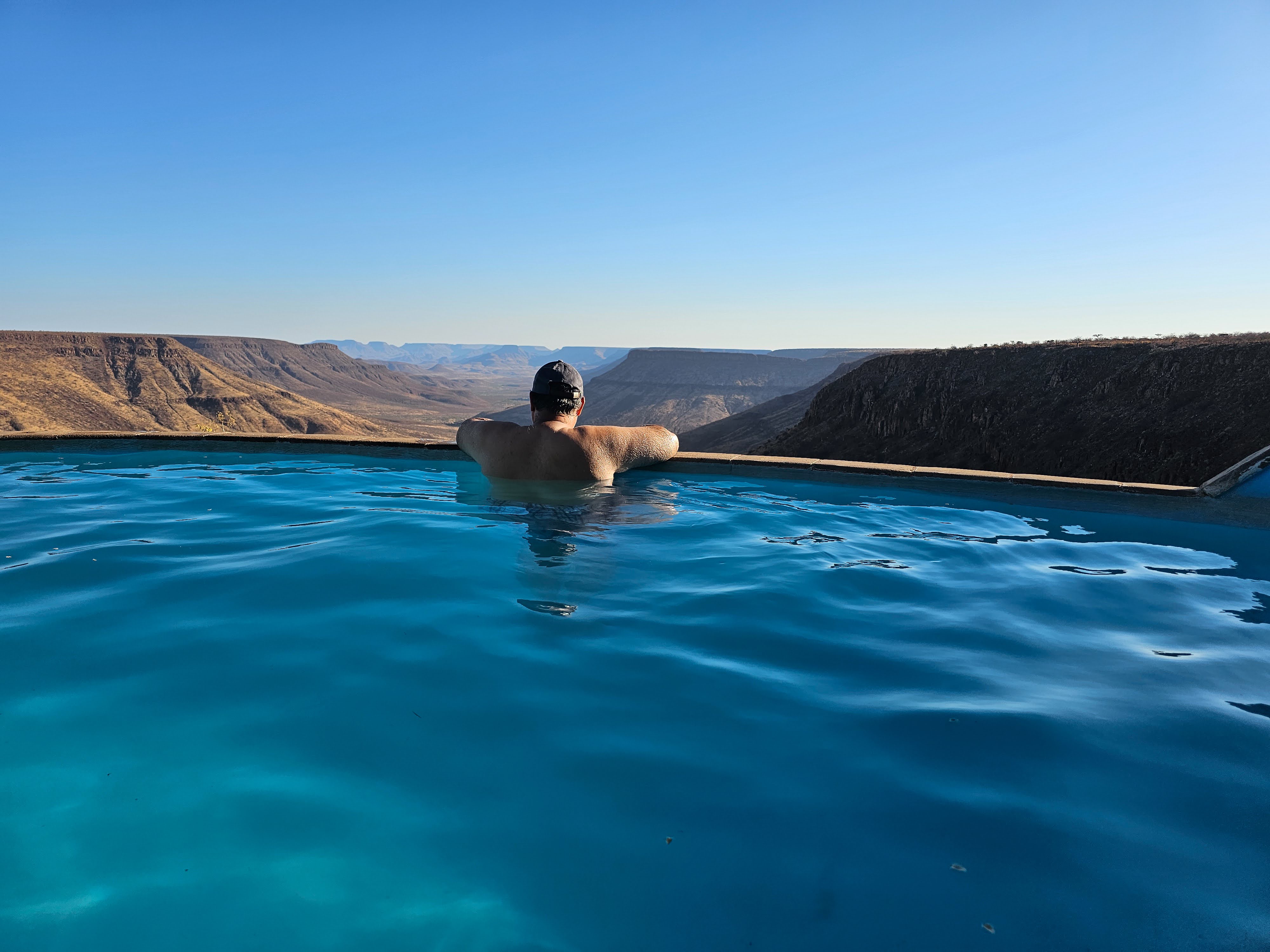
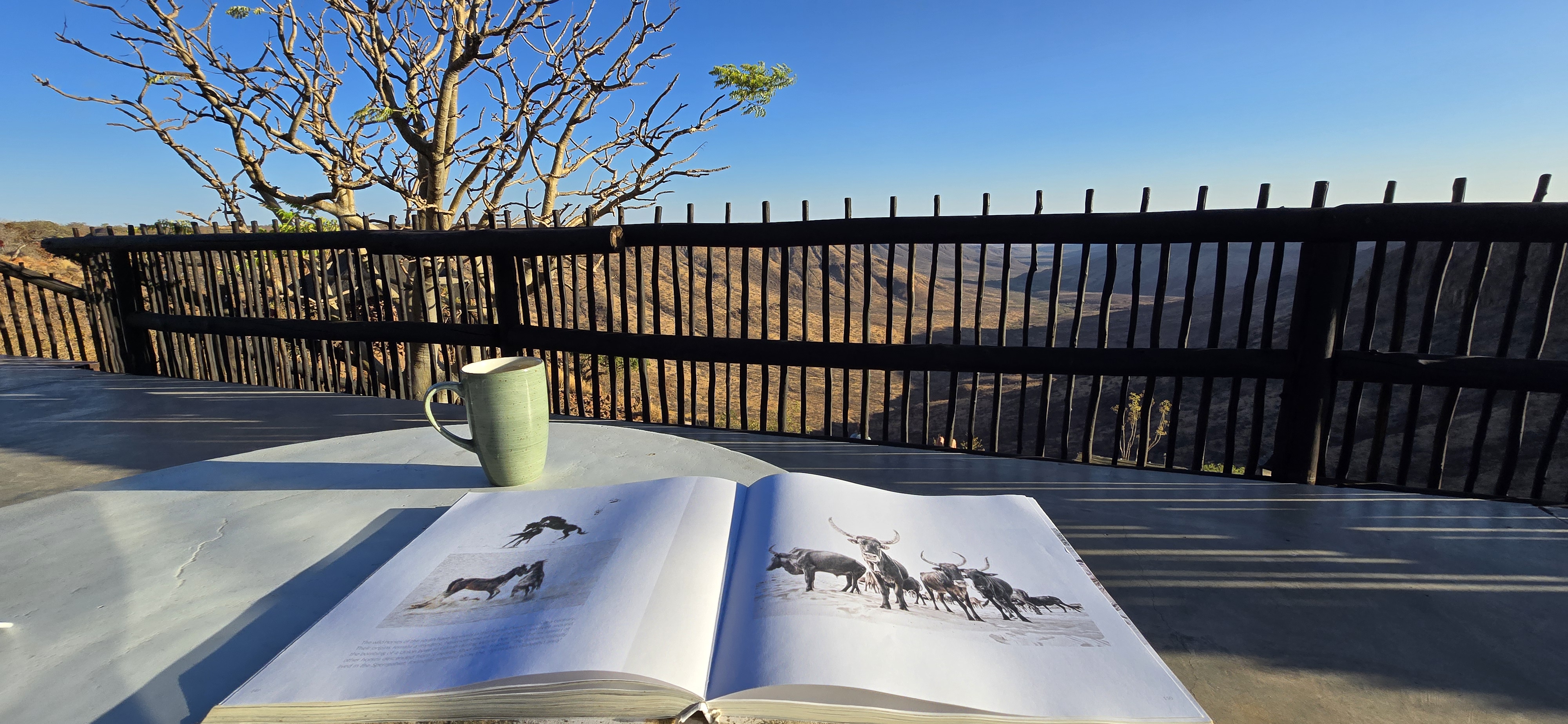
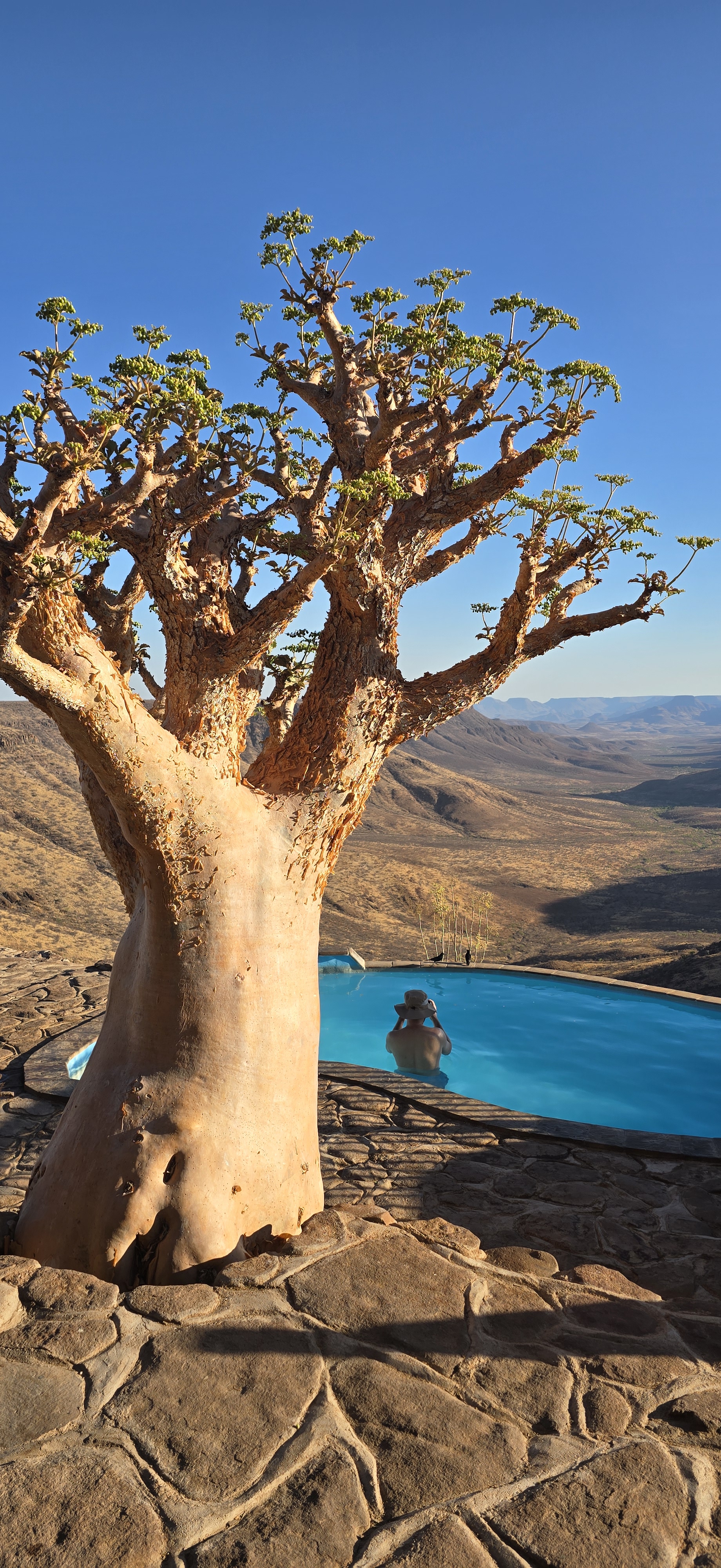
After an action-packed morning, we unwind by the pool, soaking in the stunning views of the valley below.
Astrophotography
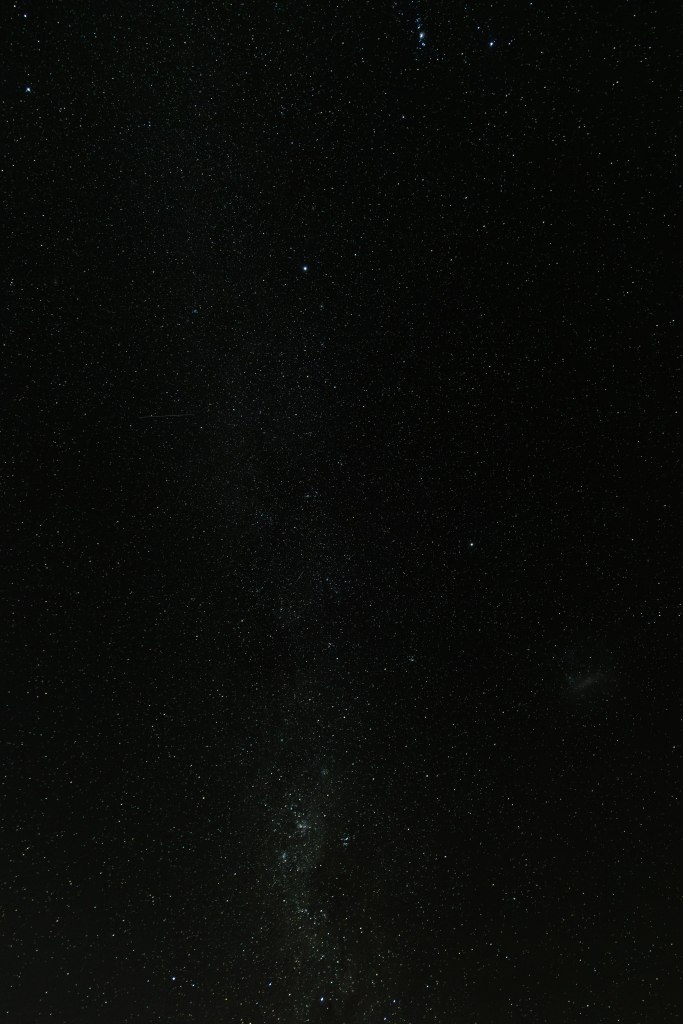
Our apps informed us that this would be another night of perfect, clear Namibia’s dark skies—rated Bortle Class 1, which means there’s virtually no light pollution. It’s the kind of place where you don’t just see stars—you see galaxies. Naturally, Nabeel and I couldn’t pass up the chance to photograph the night sky again. We set our alarms and woke up in the middle of the night to capture the Milky Way in all its glory.
By now, I was getting the hang of my Fuji camera—tweaking long exposure settings, adjusting ISO, and figuring out how to frame the sky just right. There’s something magical about seeing the Milky Way stretching across the horizon, like a celestial river flowing overhead. It made the cold and the lost sleep worth every second.
It was an unforgettable day—a day that reminded me how raw and powerful the desert truly is, and how lucky I was to experience its beauty up close.
 The Travel Chapters