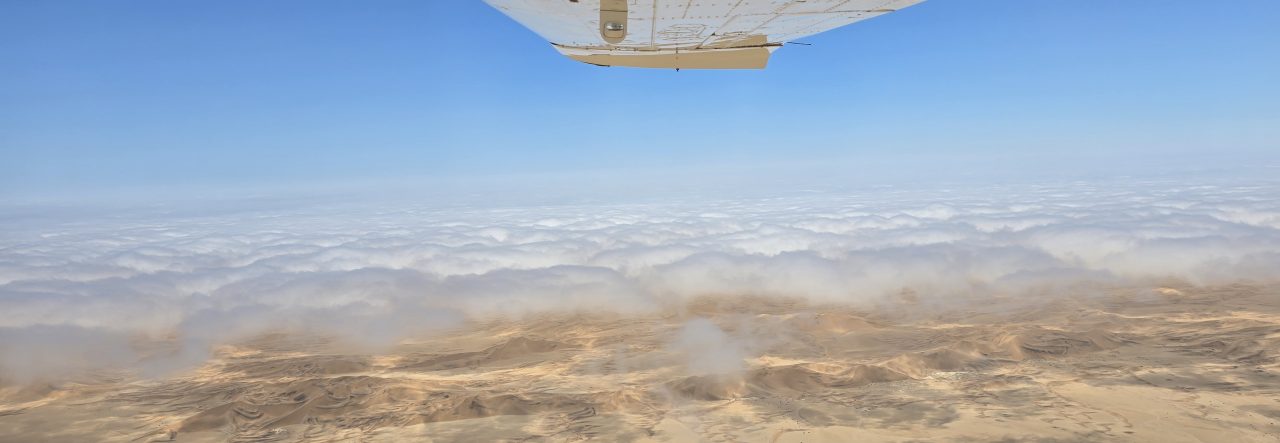
As we left the arid Namib Desert, we ventured north toward the mountainous region of Damaraland. This shift in landscape brought us to a totally different side of Namibia, where rugged terrain and towering peaks contrasted sharply with the expansive desert we had just left behind. Damaraland is known for its wild beauty—rolling hills, the impressive Brandberg Mountain, and deep valleys. The area is also home to the desert-adapted elephants, as well as ancient rock art in the Twyfelfontein area, making it a captivating destination for travelers seeking both adventure and history.
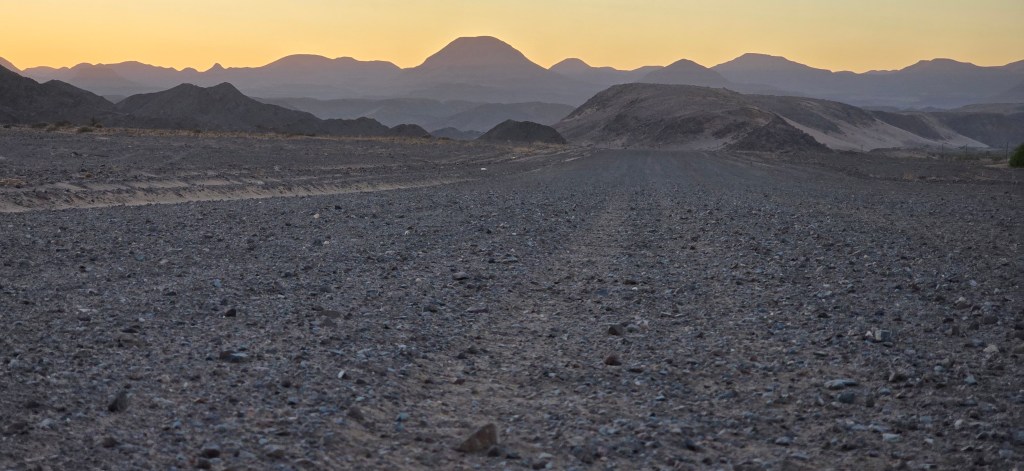
Our journey that day was long and arduous, as much of the route consisted of gravel roads. The driving required constant focus, and we found ourselves alone for hours at a time, surrounded by nothing but endless desert and mountains in the distance.
Skeleton Coast Shipwrecks
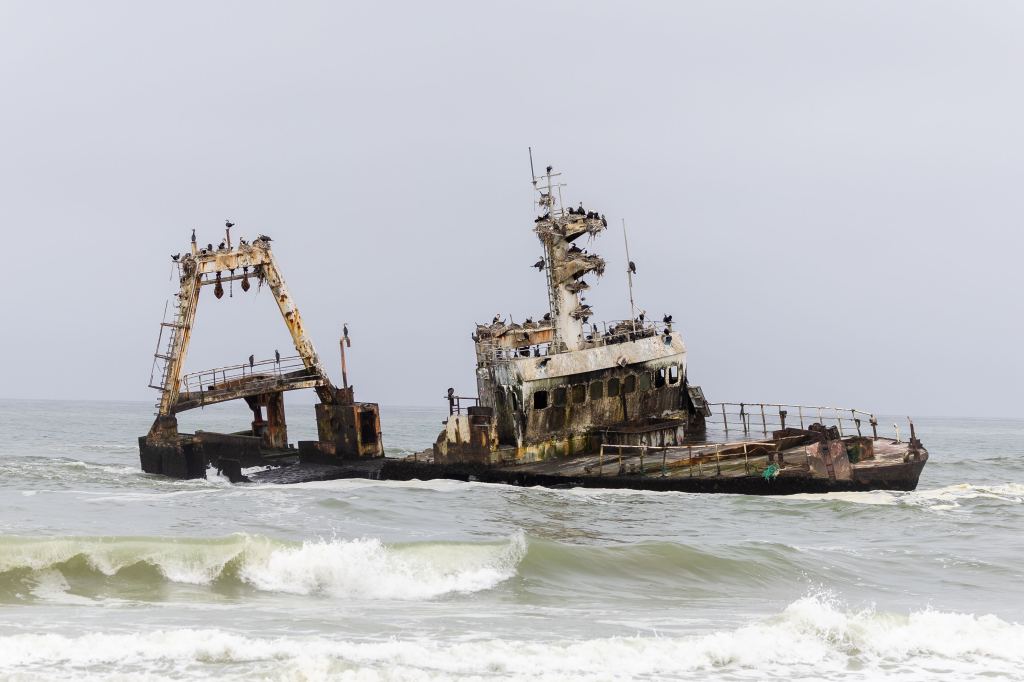
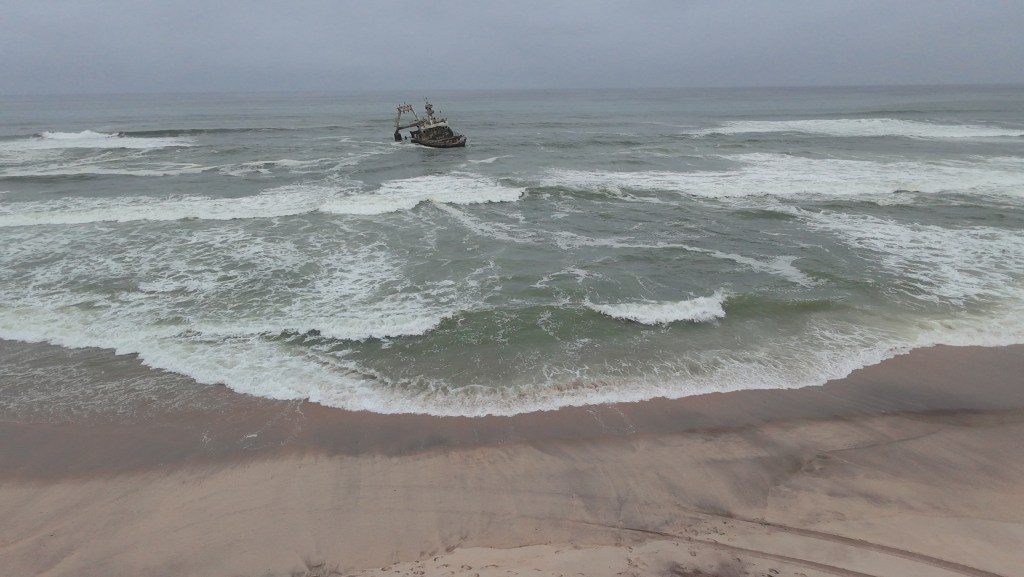
One of the more dramatic sights of the day was the wreckage of the Zelia, a fishing boat that grounded on the Skeleton Coast about 20 years ago. The harsh weather and treacherous waters have made this region notorious for shipwrecks, and this rusted remnant of a modern vessel stood as a testament to the area’s unpredictable nature. We couldn’t help but be in awe of how even the strongest of ships struggle against the raw force of the ocean here.
Side Note: We had brought along a drone to capture some aerial footage of the shipwreck. As first-time drone users, we were a bit overzealous, which led to a few crashes—thankfully, we got some incredible shots before our amateur mistakes grounded our flight attempts. Even though the wind was strong, the dramatic landscape made the effort worthwhile.
Seal Colony and Wildlife
After the shipwreck, we continued our journey, making our way to the Cape Cross Seal Reserve. Here, thousands of seals populate the rocks and the water, creating a scene of wildlife abundance amid the vast emptiness of the coastline. The smell was intense, making it difficult to stay too long, but we couldn’t resist capturing a few close-up shots of these playful creatures. Most of the seals were content lounging on the rocks, giving us plenty of opportunities for photographs.
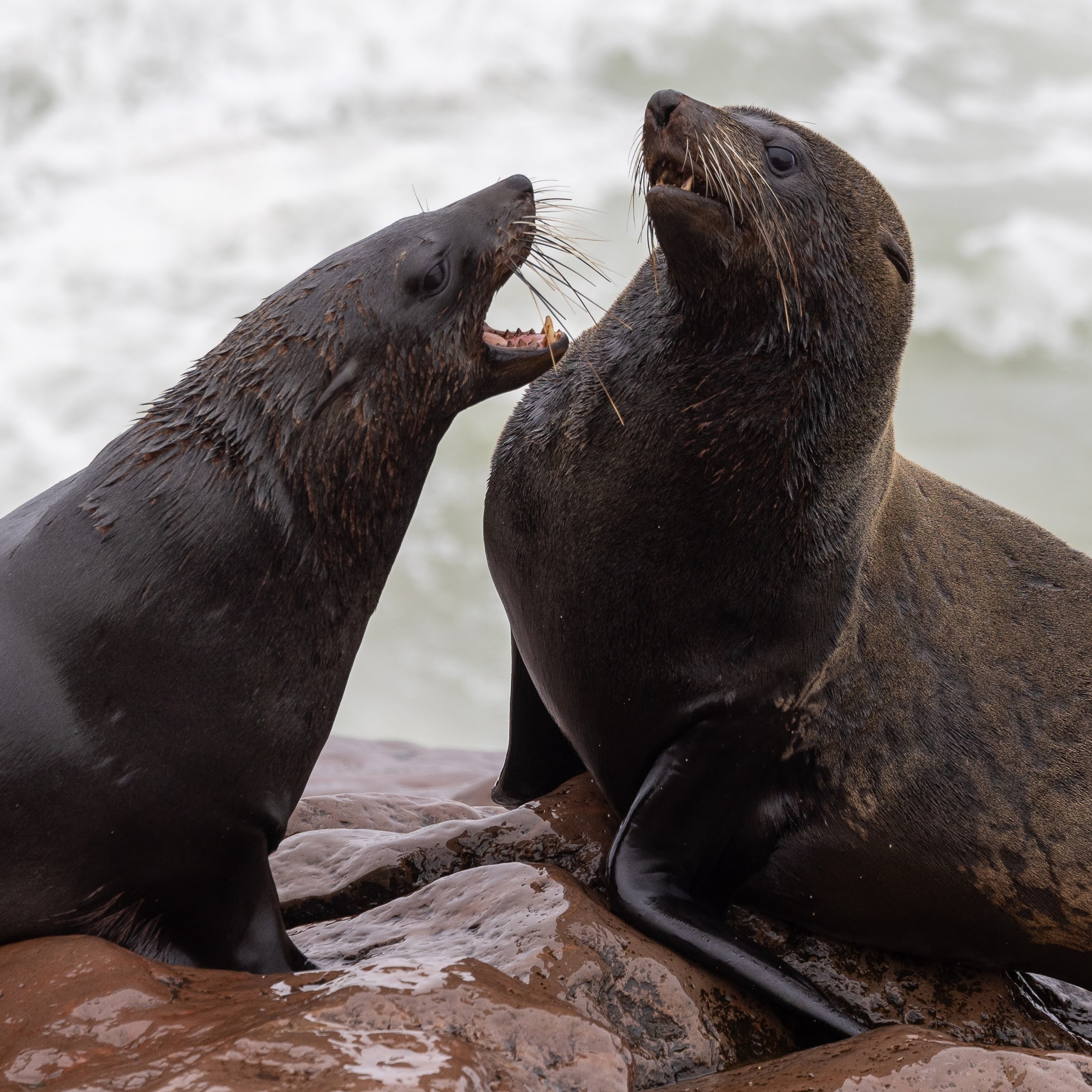
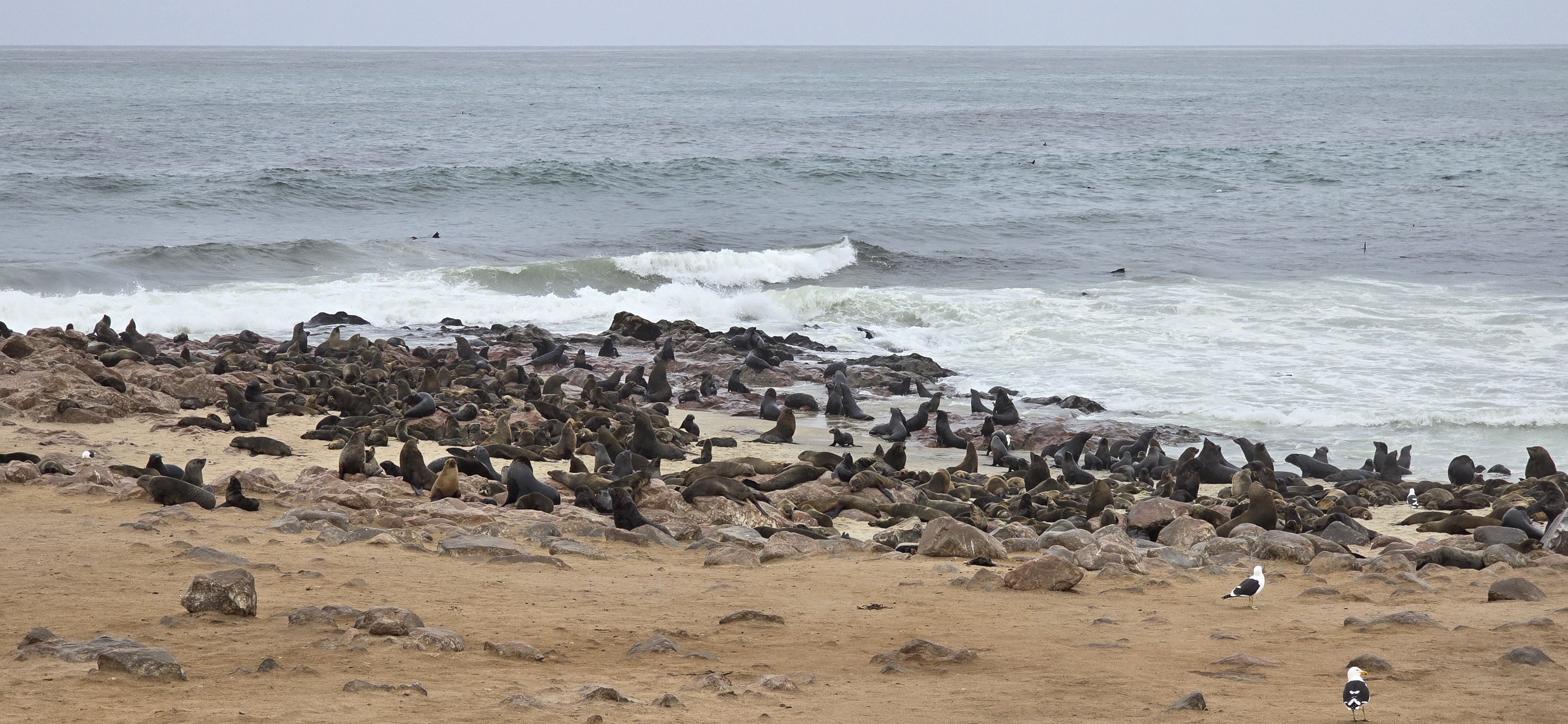
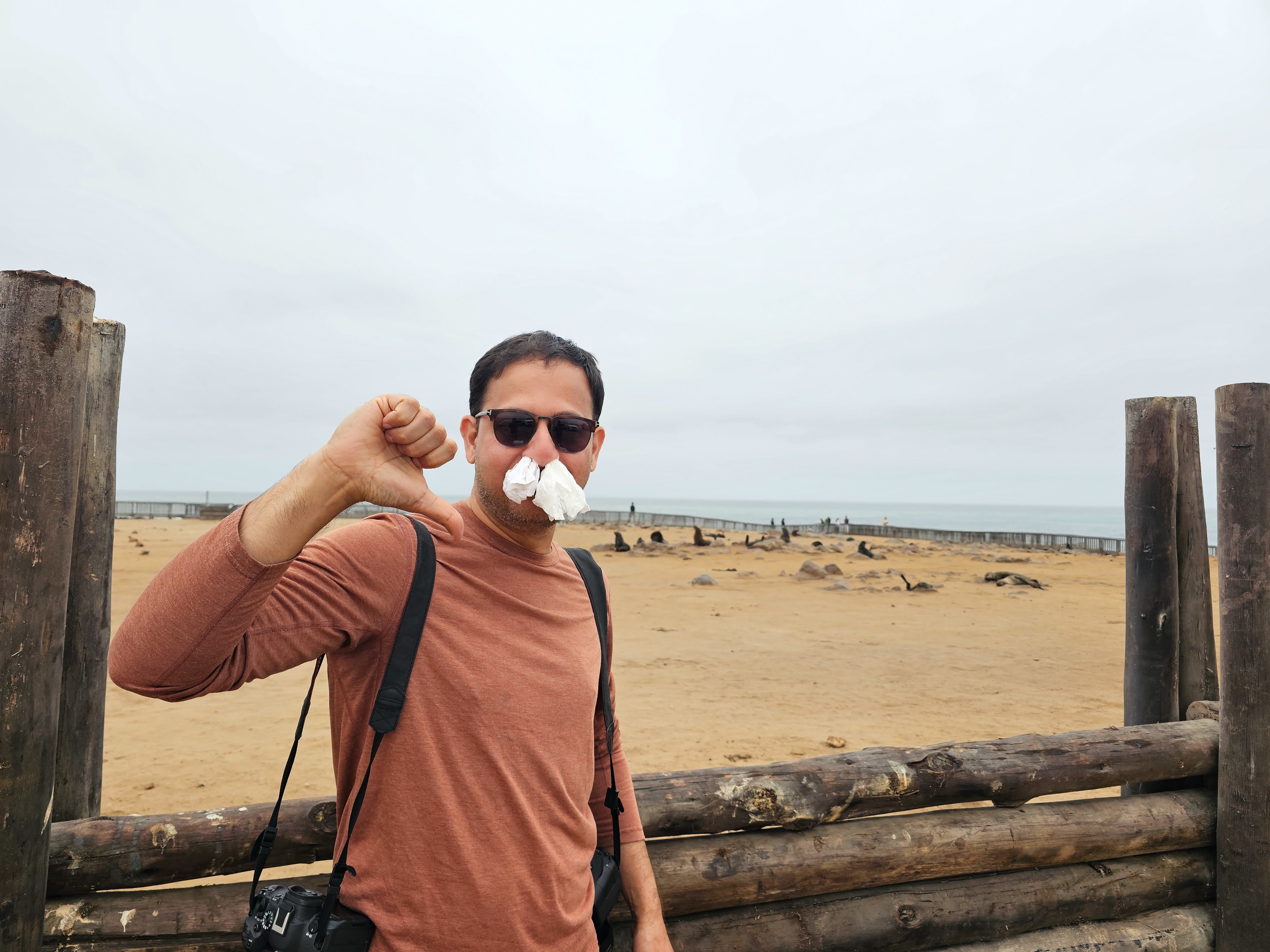
We were also reminded of the starkness of life in such a remote place, where wildlife thrives in the harshest of conditions. Some of the seals were feeding on the remains of dead fish that had washed up on the shore, a testament to the natural cycle of life and death in such an unforgiving environment.
Brandberg Mountain
Later, as we ventured further east, we passed Brandberg Mountain—one of the highest peaks in Namibia. It was the first time in a week that we’d seen mountains, and the sight was awe-inspiring. The rocky outcrop rose majestically against the flat desert landscape, reminding us of the diversity of Namibia’s topography.
We decided to take a shortcut around the mountain, but our optimism quickly turned into frustration when the gravel tracks we were following simply vanished into the desert. After traveling 10 kilometers on this detour, we realized the mistake and had to backtrack for 30 minutes to the main route. It was a humbling reminder of how easy it is to lose track in such remote areas.
In moments like these, it’s crucial to be surrounded by people you trust—those who can assess a situation quickly and calmly. Safety should always come first, but it’s also important to balance thrill and adventure in a way that doesn’t compromise your wellbeing.
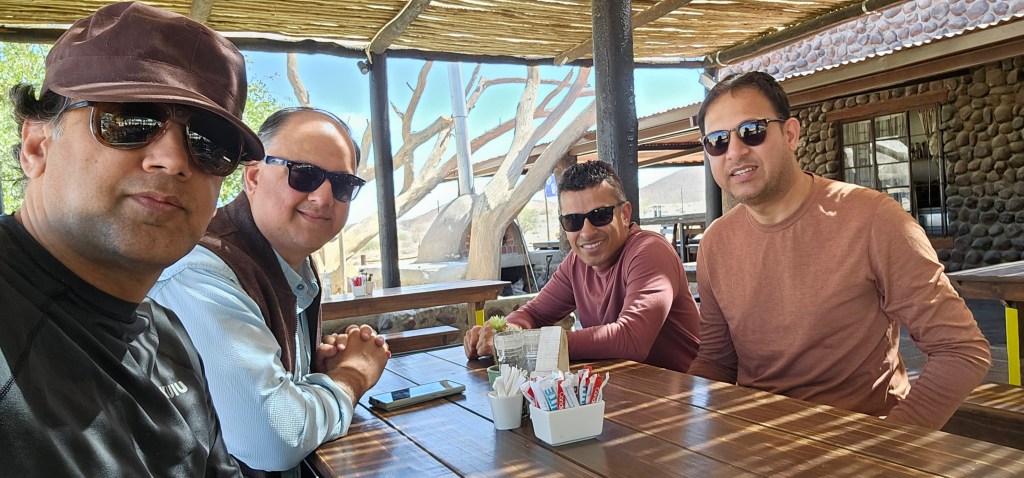
As the mercury continued to rise, we decided to take a lunch break at the Brandberg White Lady Cafe. The cheese burger and coke zero was a much appreciated comfort meal which fueled us for the remaining journey. This small town of Uis also had two gas stations (what a novelty). We promptly filled up our tank knowing there was no gas stations on the way for the remainder of our journey today.
Grootberg Lodge
We finally arrived at Grootberg Lodge, perched on a mountain overlooking the valley below. The sun had already set by the time we reached, so we knew the true beauty of the location would be revealed the next morning. As we unpacked, we were treated to a delicious dinner of Oryx steak, which had been expertly prepared for us.
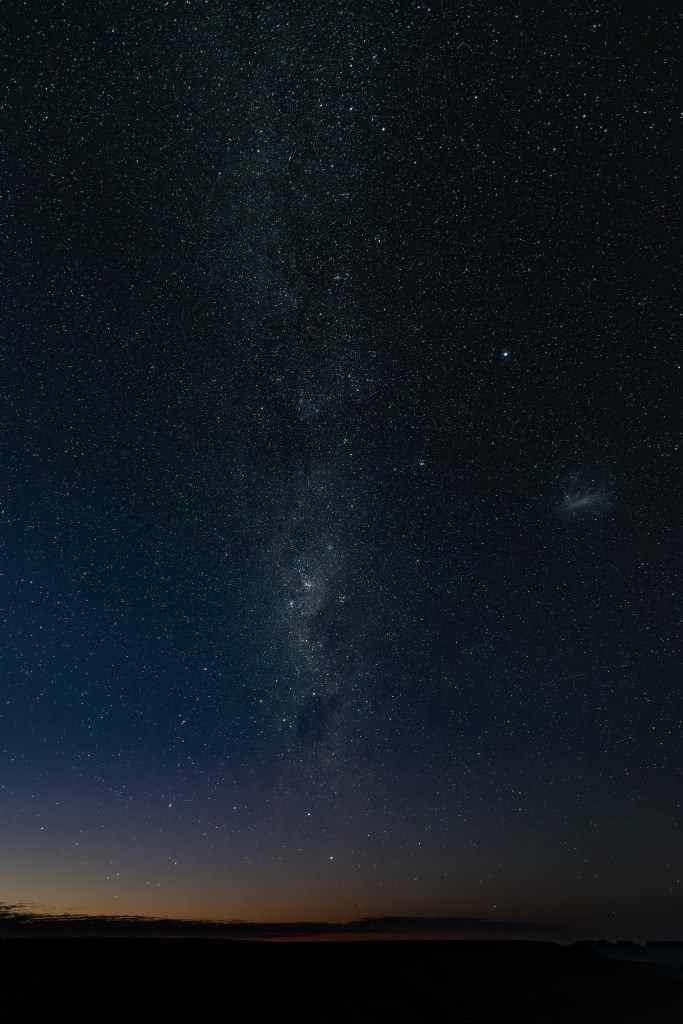
But even before morning, we were able to appreciate the stunning views. The sky above us lit up with the Milky Way, and we marveled at the clarity of the night sky. The quietness of being on top of a mountain, with the cosmos stretching above us, felt surreal. It was a perfect moment to fine-tune our camera settings in preparation for some astrophotography the next evening.
Sleeping in the Wild
As the night wore on, we settled into our rooms, which were built with thatched roofs made of straw. The wind picked up, and we heard strange noises coming from outside—small animals skittering about the roof and walls. It’s something you have to get used to when staying in the wild, though it was slightly unnerving at first. Zef, our friend, later confessed that he couldn’t sleep all night because of the noises, but I was able to drift off despite the odd sounds.
The next morning promised another day full of adventure and exploration, and we were ready to rise early to capture the beauty of the landscape once again.
 The Travel Chapters