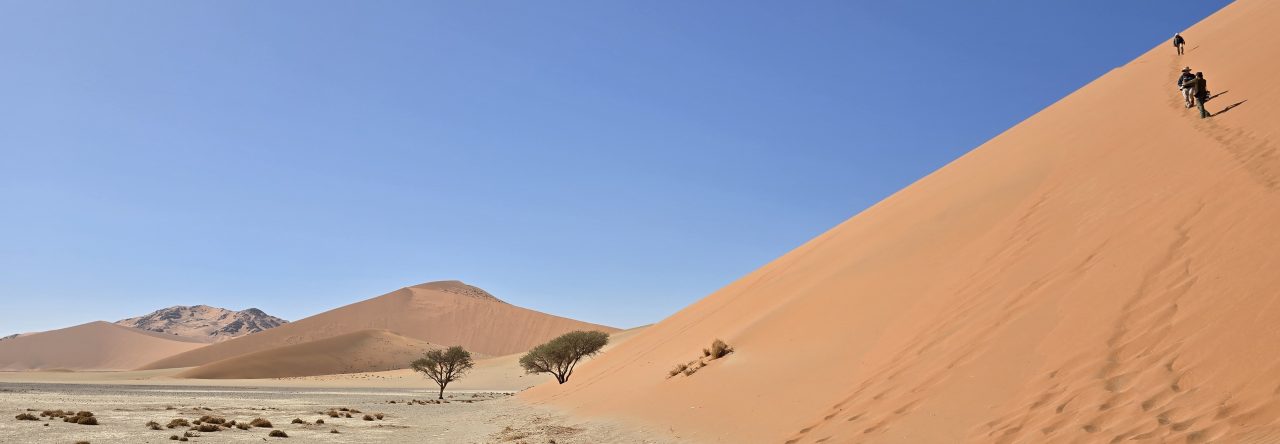
The Namibian adventure truly came alive today. The western coast of Namibia, especially around Swakopmund, has transformed into a playground for thrill-seekers. From dune buggies and desert safaris, reminiscent of experiences in the Middle East, to scenic flights where you can witness the surreal meeting of the Atlantic Ocean and the ancient Namib Desert—this place offers it all.
Explorer Dune Buggy Ride
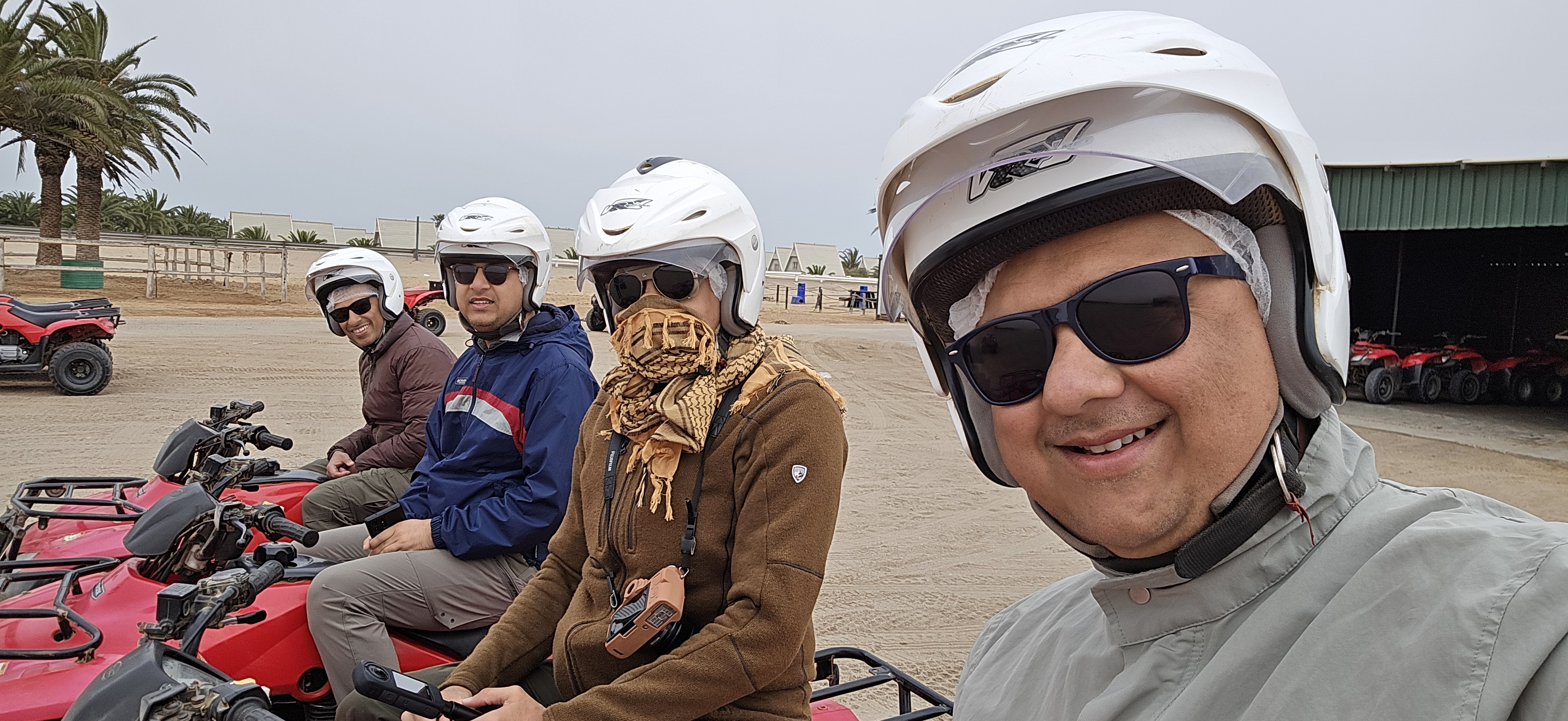
We kicked off the morning with an Explorer Dune Buggy ride, and what a ride it was.
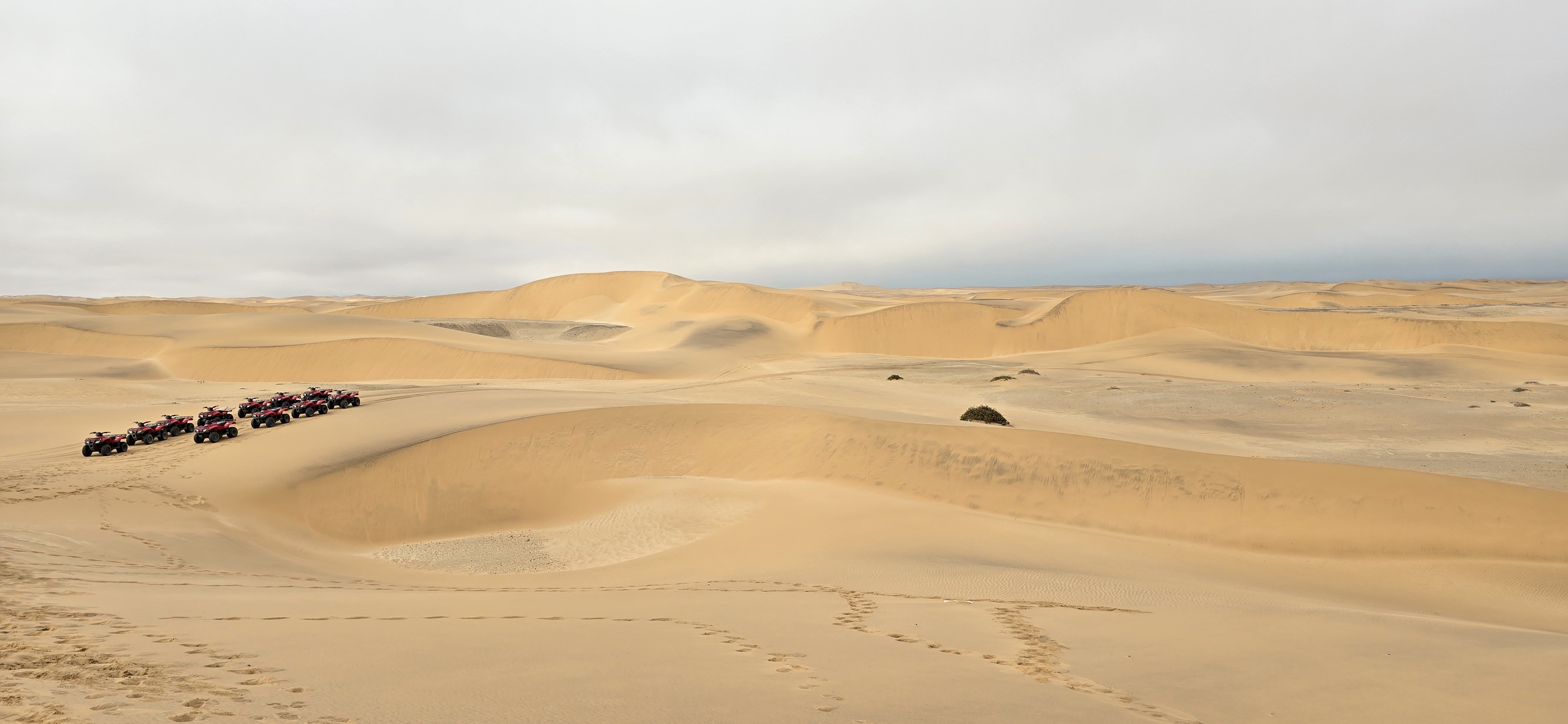
Strapped into our helmets, engines rumbling beneath us, we zipped through towering sand dunes just outside of Swakopmund. The cool Atlantic breeze rushing through my helmet as we zigzagged up and down the dunes was exhilarating. There’s a real art to driving on sand—accelerate too little and you sink (lets just say a few of us were guilty of this), too much and you risk flipping over the crest. Our guide, a seasoned desert navigator, led the way with ease, carving perfect paths through the golden waves of sand.
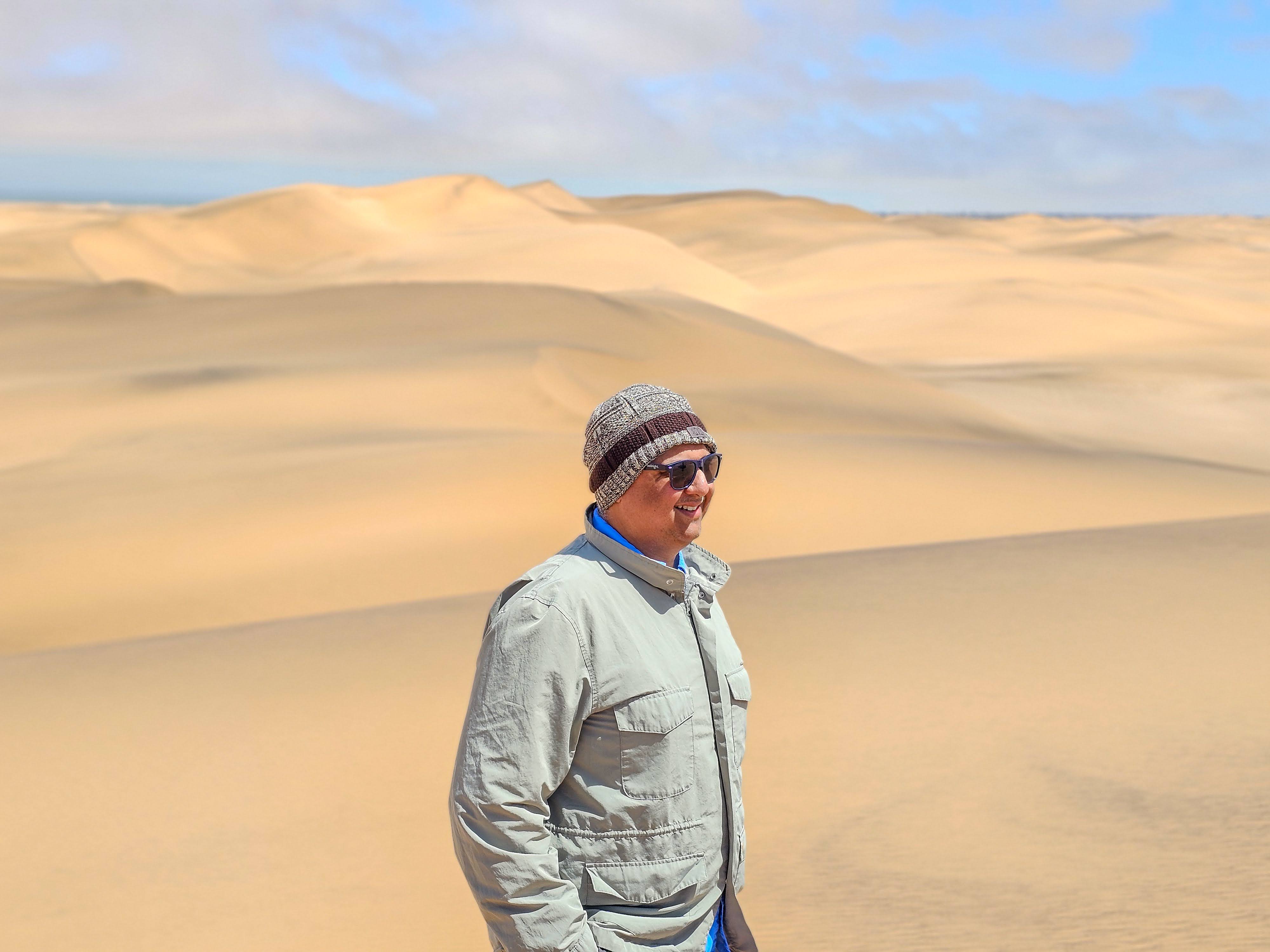
The constantly shifting dunes felt like an alien world—soft curves shaped by wind, their patterns changing with every gust. Occasionally, we would crest a tall dune and suddenly be met with a view that took our breath away: the endless desert rolling into the deep blue Atlantic Ocean. There are few places in the world where you can see such stark contrast—ocean meeting desert in a visual collision of blue and burnt orange.

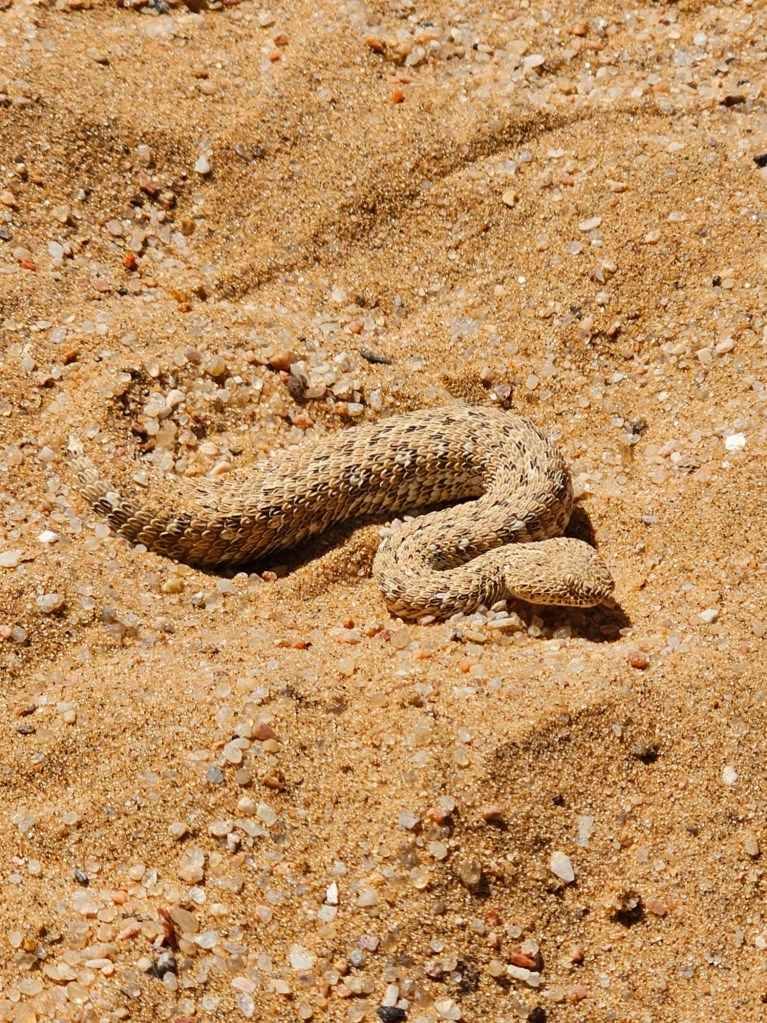
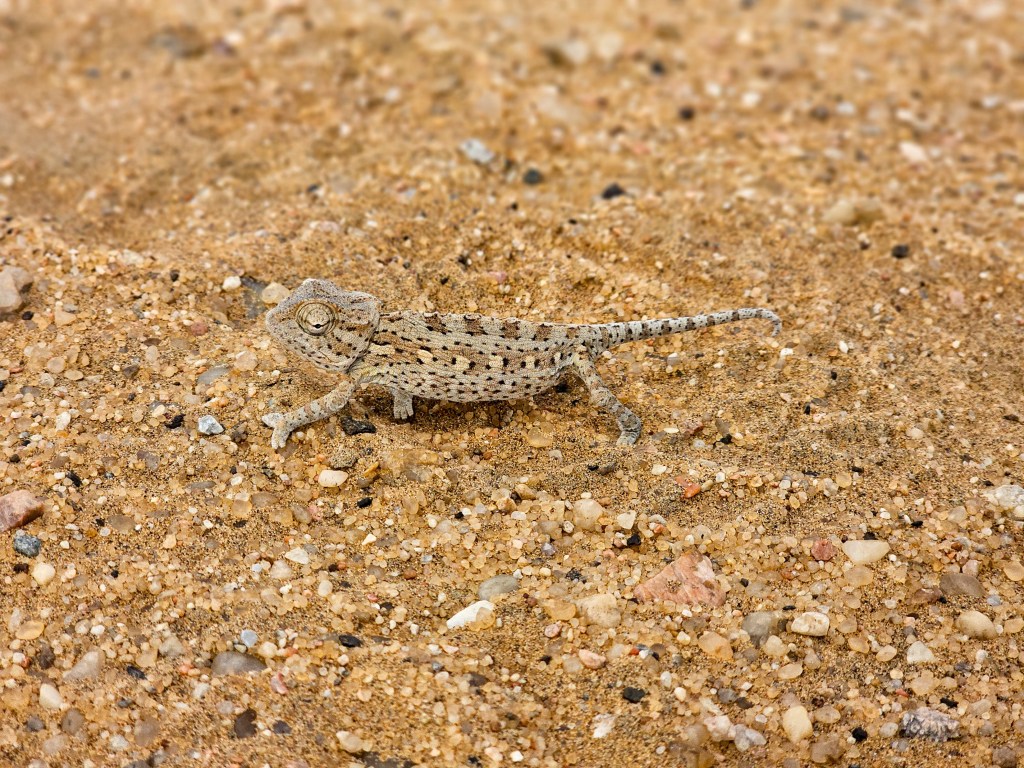
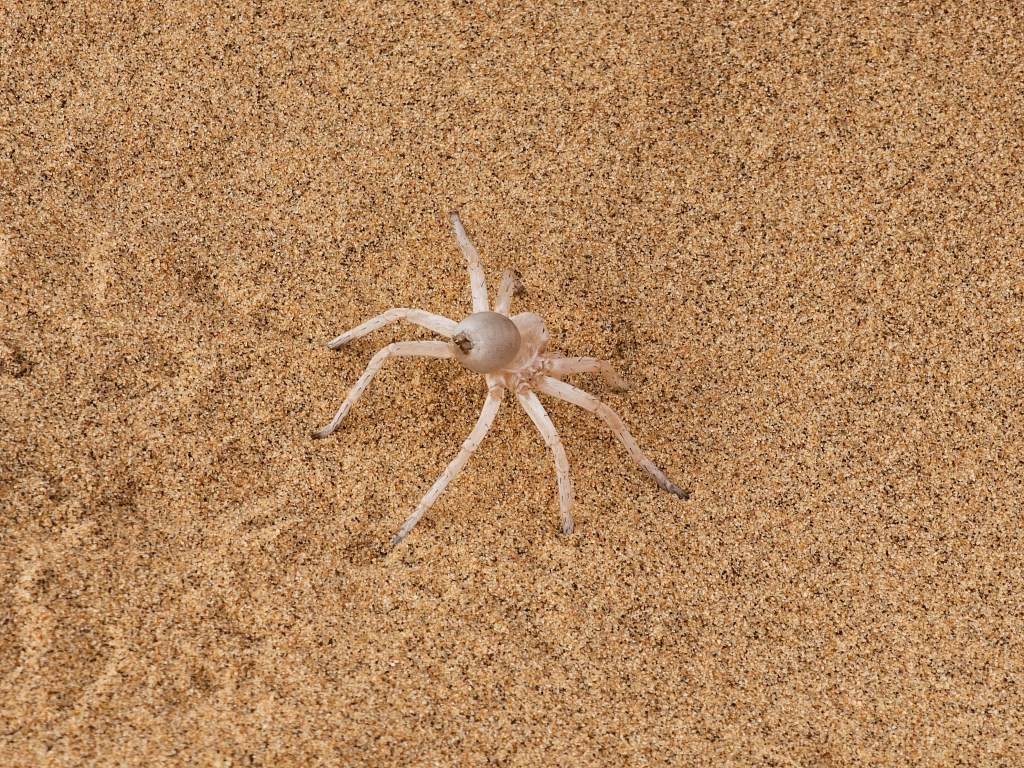
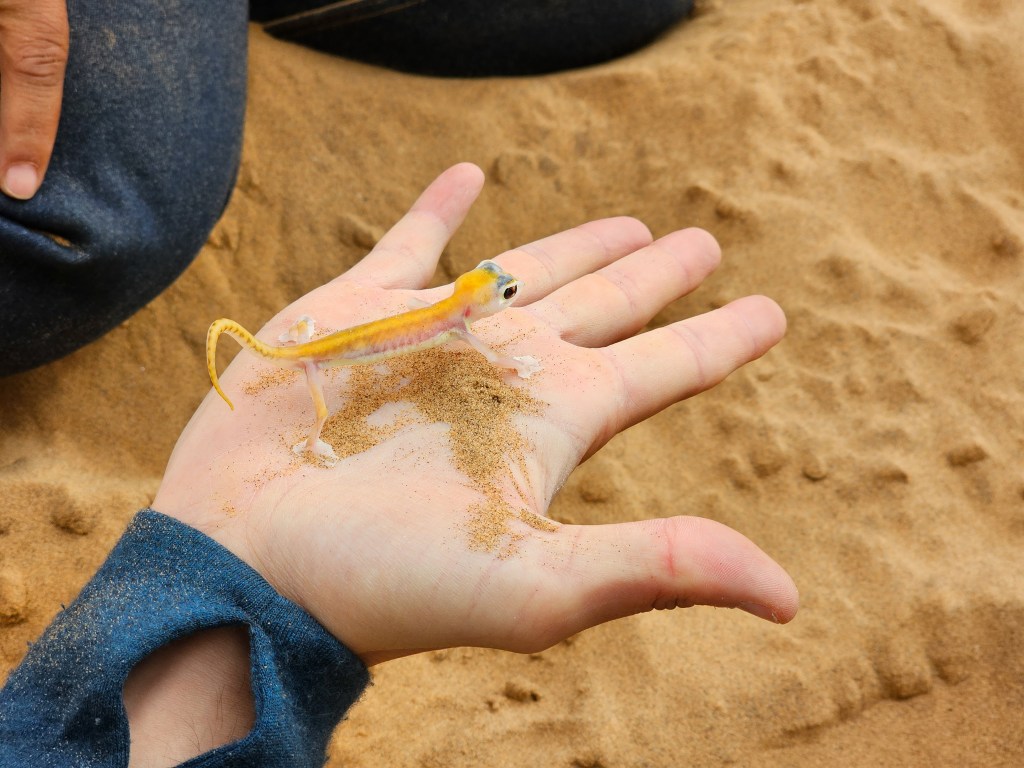
The Little 5 of the Namib Desert
While the thrill of speed was part of the experience, it was the quiet stops along the way that offered unexpected magic.
Our guide pulled us over at various points to introduce us to a concept we hadn’t heard before: the “Little 5” of the Namib Desert—a play on Africa’s famous Big 5 game animals. In this arid environment, the stars of the show are far smaller but no less fascinating.
We encountered:
- Namib Desert Gecko – translucent, almost glowing in the morning light.
- Shovel-snouted lizard – quick and elusive, dashing across the hot sand.
- Sidewinder snake – leaving behind its telltale sidewinding trail.
- Palmato gecko – another desert dweller with oversized eyes adapted to nighttime hunting.
- Dancing white lady spider – which buries itself beneath the sand, a master of camouflage.
The guide’s ability to spot these creatures was astounding. It seemed like he was reading the desert like a book—seeing signs invisible to the rest of us. In places that seemed utterly lifeless, he would pull back a patch of sand and reveal a wriggling lizard or a sleeping spider. It was a humbling reminder that life finds a way, even in the harshest conditions.
Bird’s-Eye Over the Namib – Afternoon Flight
After a thrilling morning tearing through the dunes in our buggies, we switched gears in the afternoon for something more serene—but no less spectacular: a scenic one-hour flight over the Namib Desert.
As we lifted off from the small desert airstrip, a gentle fog still lingered over parts of the coast—common in this region due to the cold Benguela Current meeting the warm desert air. While visibility toward the Atlantic was limited, the soft marine layer gave the landscape a mystical, otherworldly glow.
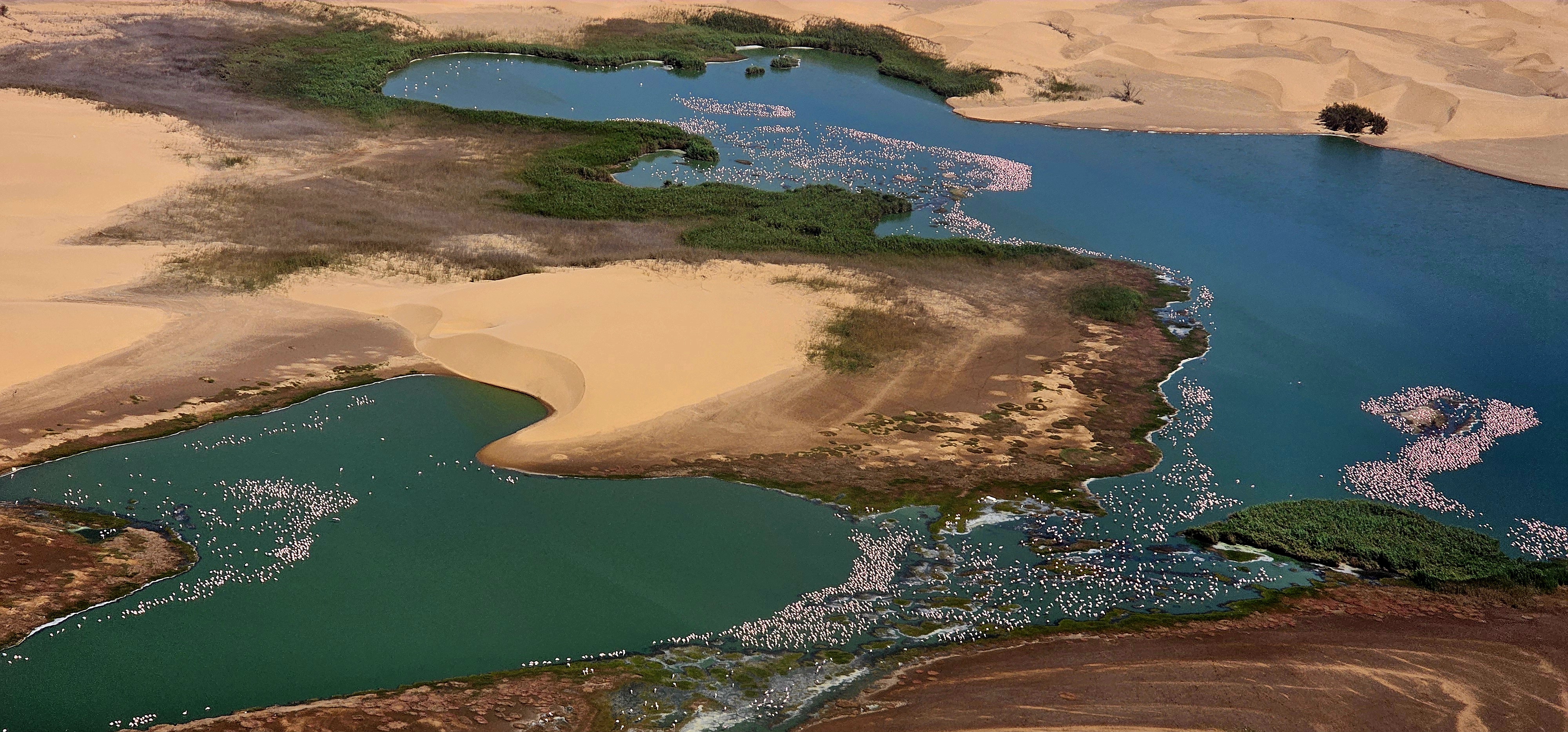
From the air, the desert unfolded beneath us like a canvas of reds and golds. You can truly grasp the scale of this ancient land—towering dunes stretch to the horizon, and dry riverbeds snake through the terrain like ghost trails. The Tsauchab River, now mostly dry, carved a clear path through the desert, dividing the rocky gravel plains from the massive sand dunes, with the iconic white clay pans of Sossusvlei and Deadvlei standing out like patches of snow.
These dunes, including Big Daddy and Dune 7, are some of the tallest in the world, rising nearly 1,000 feet. From above, they appear perfectly sculpted—wind-carved ridges casting dramatic shadows in the afternoon sun.
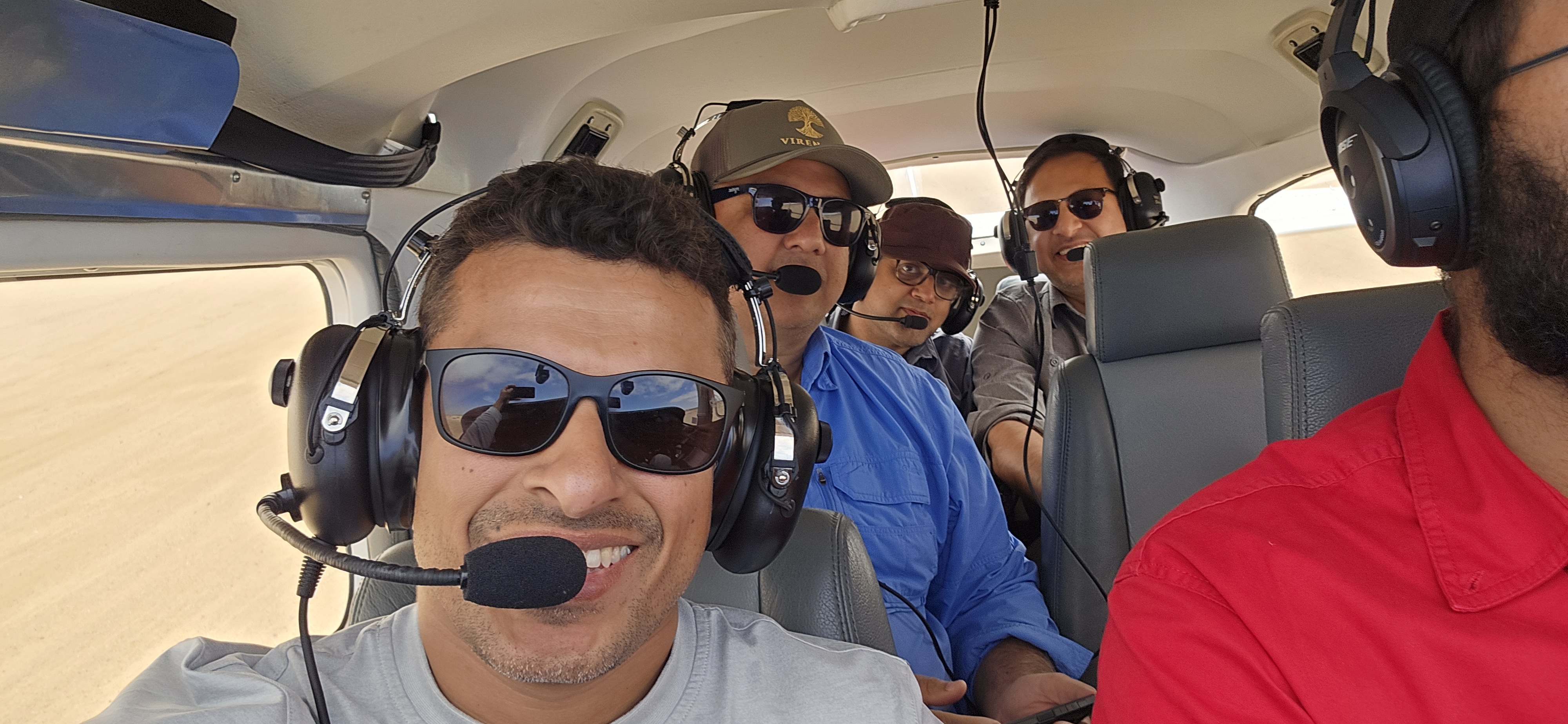
Zef, a recreational pilot himself, rode up front and eagerly assumed the role of co-pilot. He couldn’t resist jumping in on navigation and helping track our flight path. At one point, he attempted to follow the radio communications with Namibian air traffic control, but quickly admitted, with a laugh, that the thick local accent made it tough to decipher. Still, he was grinning the whole flight, soaking in every moment like a kid in a candy store.


Sunset Desert Safari – The Sand Meets the Sea
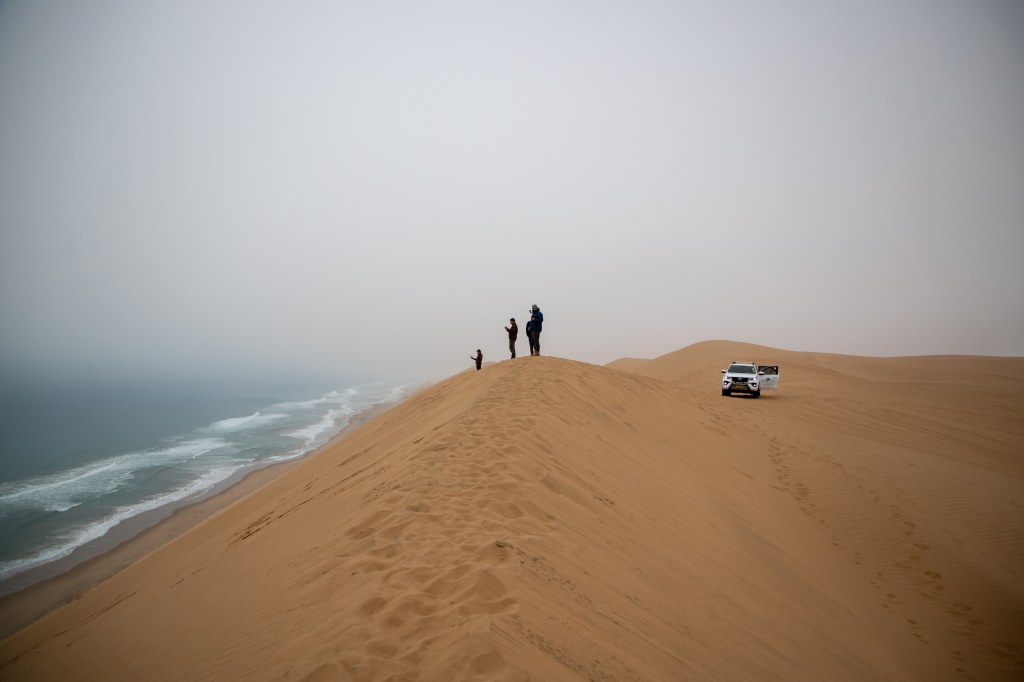
Later that day, we traded wings for wheels again and joined a sunset desert safari—an exhilarating off-road adventure that took us deep into the coastal dunes outside Swakopmund. Unlike our morning buggy ride, this was in a custom-built 4×4, and the terrain we covered was more extreme, dramatic, and incredibly scenic.
Our guide, Tom, a local with years of desert experience and a sharp sense of humor, led the way. He navigated the vehicle with precision and confidence, climbing near-vertical dunes and then plunging down the other side. It was as close as you can get to free-falling in a car, and from my spot in the front passenger seat, I found myself gripping the handlebar and bracing my stomach more than a few times.
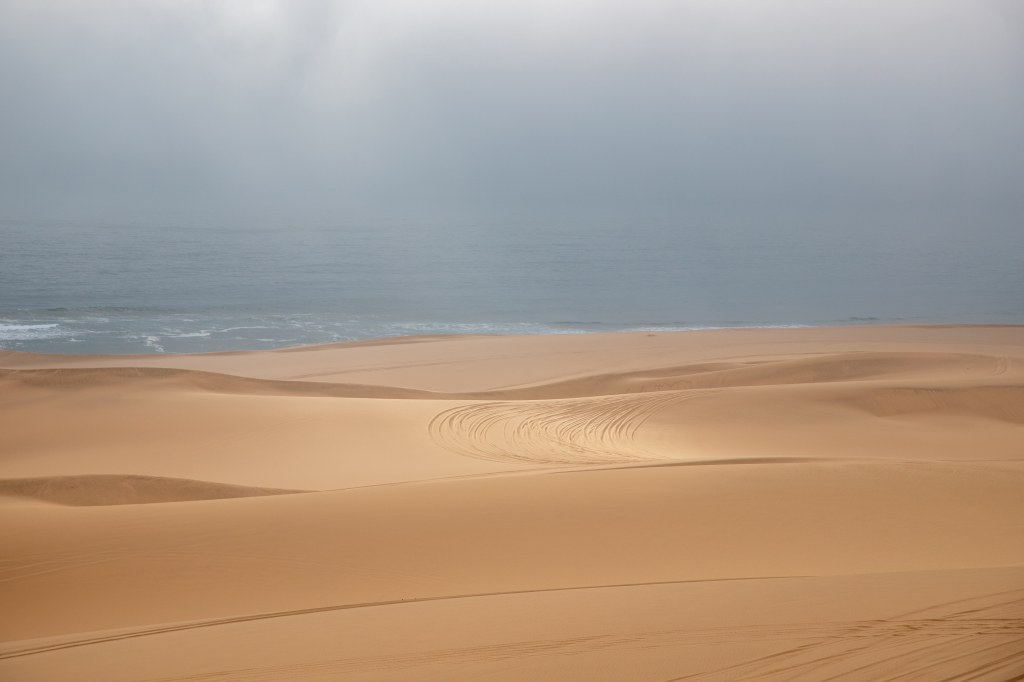
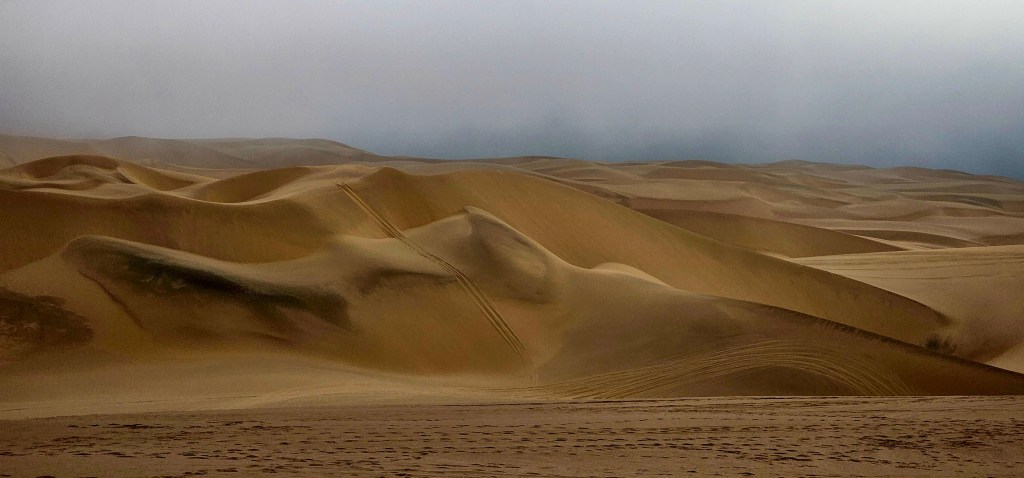
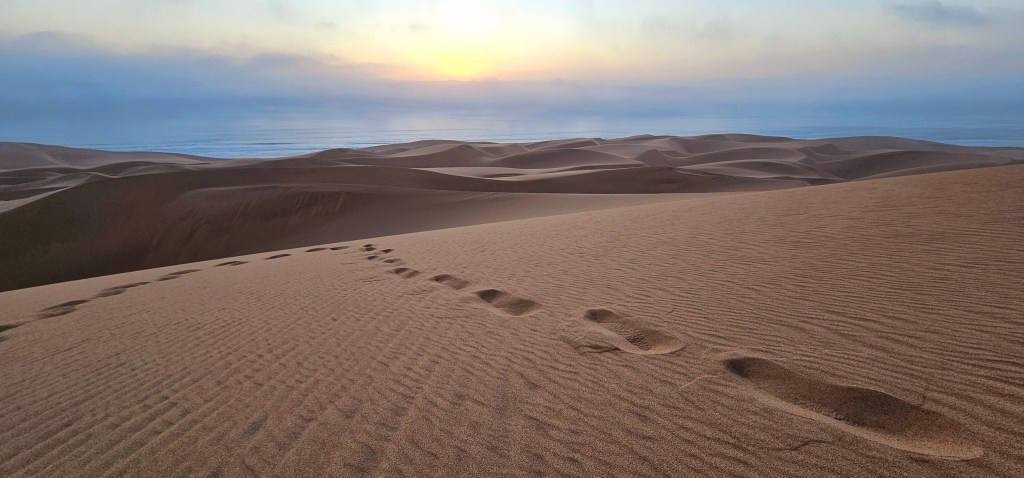
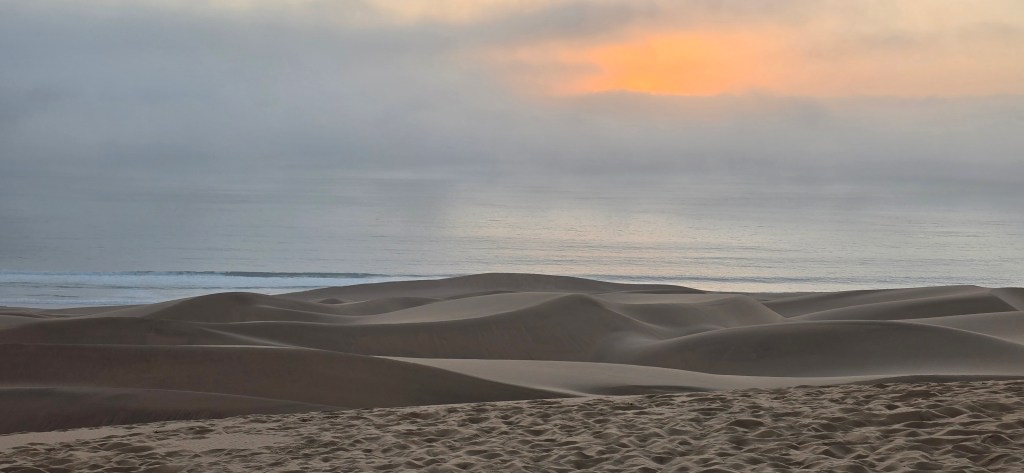
What made this safari especially unique was the towering dunes that kiss the Atlantic Ocean, a surreal meeting point of sand and sea. As we crested one of the taller dunes, the view of the ocean stretched out below us, with the late-afternoon sun reflecting off the waves and the wind sculpting the sand into graceful curves. It was one of the most beautiful scenes I’ve ever witnessed.
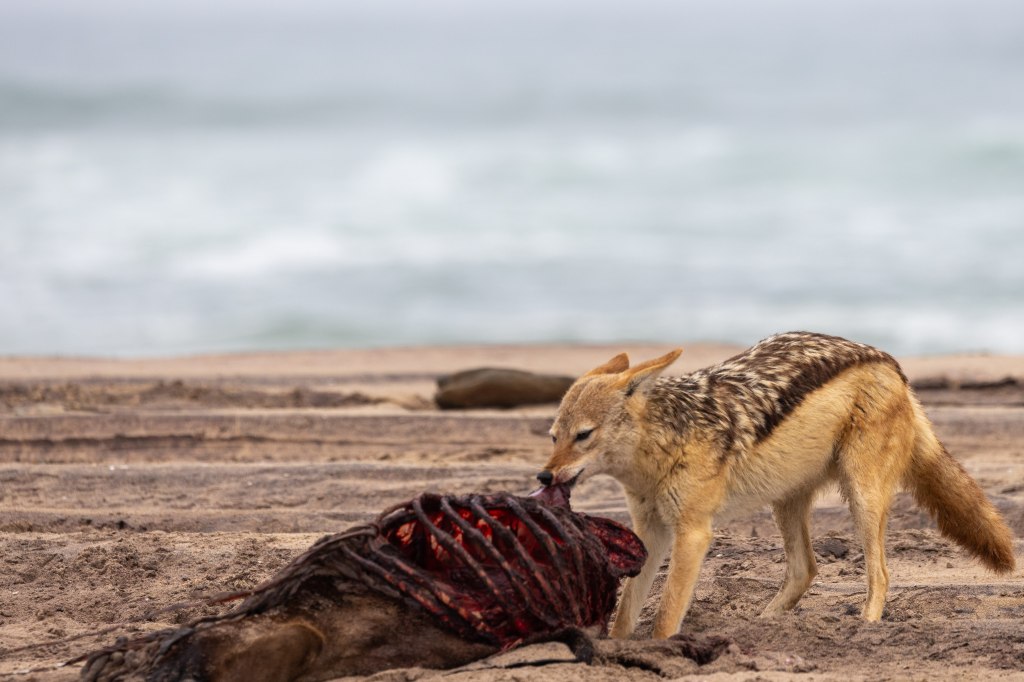
Tom also had a keen eye for wildlife. We spotted jackals in the distance, their silhouettes cutting across the dunes in search of food. Some were gathered near the beach, feeding on washed-up seals, a stark reminder of the harsh cycle of survival here. In the distance, we saw a lone oryx, Namibia’s national animal, gracefully navigating the dunes like it had done for centuries. These antelope, part of the bovid family, are incredibly well-adapted to life in this extreme climate—surviving without direct water sources, absorbing moisture from the plants they eat, and regulating their body temperature through specialized nasal passages.
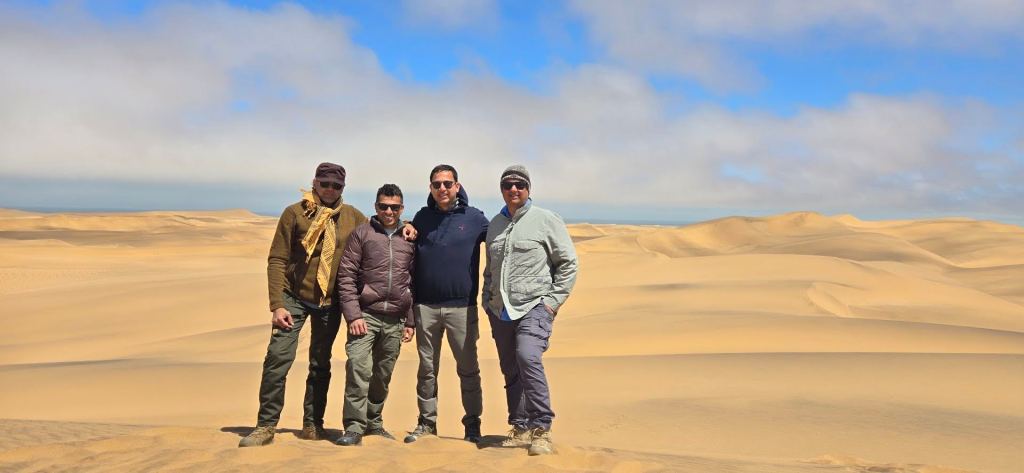
We had our cameras out for nearly the entire drive, trying to capture the stillness, the scale, and the drama of the landscape. One particular moment—a beam of golden light hitting the crest of a dune while a jackal trotted across—was immortalized by Nausherwan, whose photo from that evening later won recognition in an African wildlife photography magazine.
But beyond the thrill of the drive and the beauty of the scenery, there’s always something deeper I take away from these moments in Africa. Seeing how the animal kingdom quietly coexists in places where human presence is scarce, how life adapts and thrives in some of the most inhospitable environments—it’s humbling. It reminds me that there’s an entire parallel universe of rhythms, instincts, and survival playing out every day, completely independent of us. That awareness, that awe, is part of what draws me back to this continent time and again.
Sundowner on the Dunes – A Moment of Stillness in the Wilderness
As the adrenaline of the safari began to settle, Tom surprised us with what can only be described as a luxury experience in the middle of nowhere—a sundowner setup atop one of the highest dunes overlooking the Atlantic.
A white tablecloth fluttered in the breeze, with neatly arranged glassware, appetizers, and chilled beverages laid out with precision. It felt surreal—standing in warm sand, sipping a cold drink, watching the sun melt into the ocean from the crest of a dune in one of the most remote places on Earth. The silence was profound, broken only by the soft breeze and distant waves. It was deeply humbling.
This wasn’t just a meal—it was a celebration of place and presence, a rare pause where we could fully absorb the magic of Namibia’s Skeleton Coast.
Into the Dark – A Twist of Adventure
As the final rays of sunlight dipped below the horizon, we packed up and began our journey back toward Swakopmund. I thought the day had peaked—but the day had one final thrill in store for us.
Driving along the edge of the ocean, with the sky darkening and the tide rolling in, was like stepping into a photograph. This is the quintessential Skeleton Coast moment—wild, isolated, breathtaking. But what followed reminded us of how quickly nature can shift from serene to serious.
As darkness took hold, the path became less visible, the soft sand harder to read. Suddenly, our vehicle veered slightly, and we found ourselves surrounded by water. Tom, still driving at speed to avoid getting stuck, quickly realized we had slipped off the tracks and were unintentionally heading toward the waves.
It all happened in the span of 30 seconds, but those seconds felt much longer. The moment I glanced over and saw a flicker of concern on Tom’s face, my heart skipped a beat. He reversed fast, trying to reorient, but the tracks had vanished in the low light. With no visible landmarks, it’s incredibly easy to lose direction—the dunes all start to look the same.
Thankfully, Tom’s years of desert experience kicked in. He adjusted, retraced our direction, and guided us back onto firmer terrain. While it may have been routine for him, for us it was a jolt of real fear—and respect—for the desert’s power.
💡 Travel Tip: Never attempt to drive solo in the desert. Getting lost or stuck is not just possible—it’s likely. Always go with an experienced local guide.
Back to Base – A Moment to Breathe
Exhausted but buzzing from the day’s events, we made the hour-long drive back to Swakopmund in quiet reflection. Back at the hotel, we packed up our gear, knowing tomorrow would take us to a completely different region of the country.
Namibia doesn’t just offer beauty—it demands your attention, and then rewards you in moments of awe. That night, sleep came easy.
 The Travel Chapters