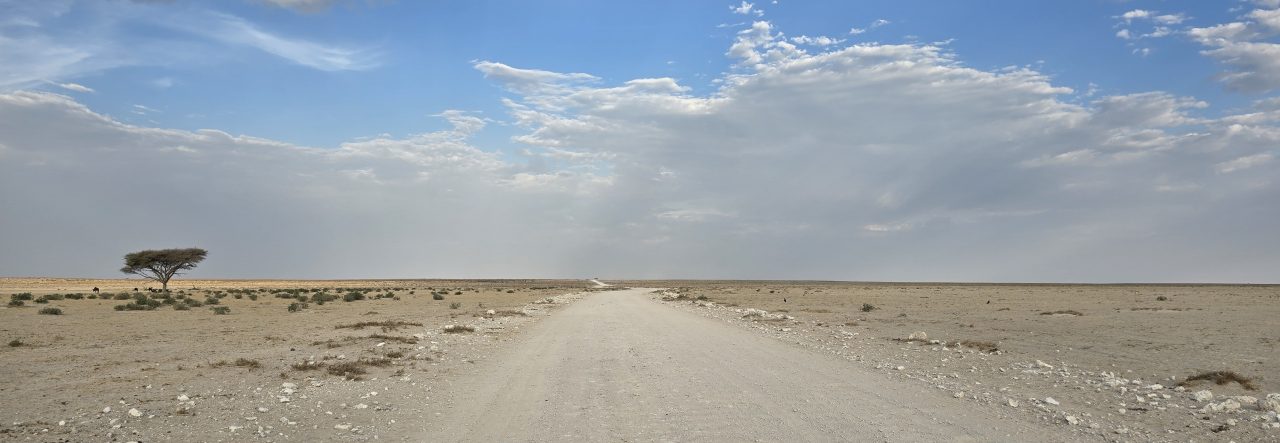
We started our day early, bidding farewell to Sossusvlei Lodge as we began our journey northwest to the coastal town of Swakopmund. The drive spanned approximately 220 miles (about 350 kms), and while that might not seem long on paper, it took us most of the day due to the terrain, frequent stops, and the temptation to constantly pause and photograph Namibia’s otherworldly landscapes.
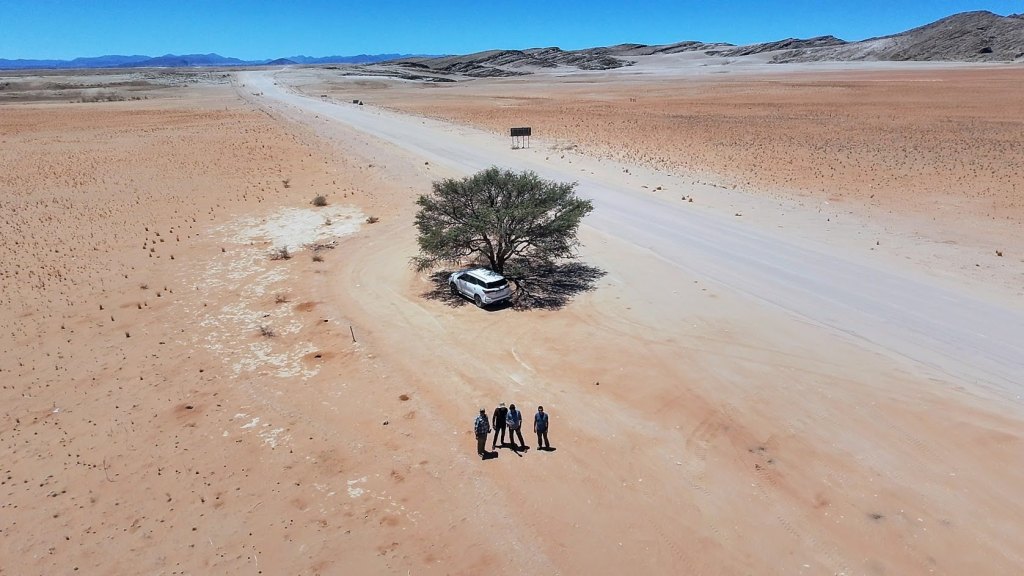
This stretch of Namibia is as remote as it gets—no towns, no houses, no power lines, just raw, untouched desert.
The Challenge of Namibian Roads
Driving in this part of the country is an experience in itself. Most of the roads are unpaved gravel tracks, and while they’re manageable, they demand full concentration. Anything above 50 mph (80 km/h) becomes dangerous. The gravel shifts beneath your tires, making skidding a very real risk. There’s a fine balance between enjoying the views and keeping your eyes glued to the road.
A Break at Solitaire
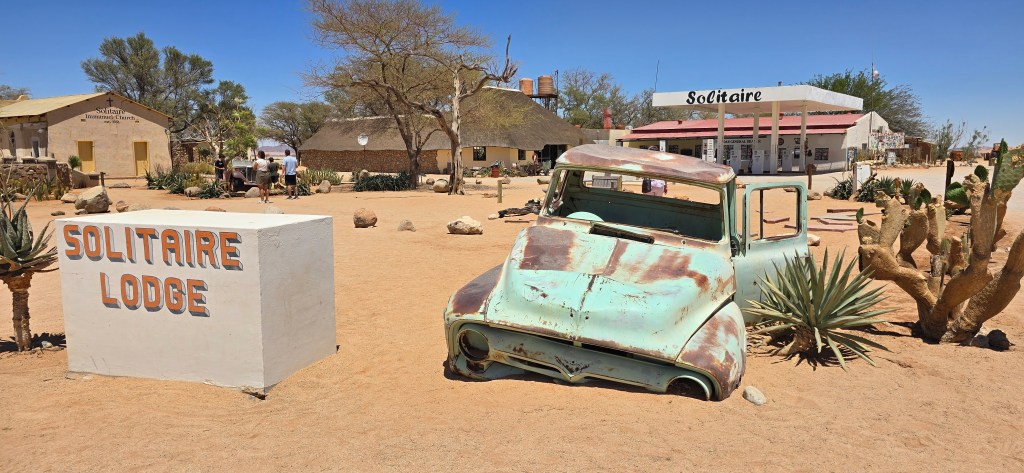
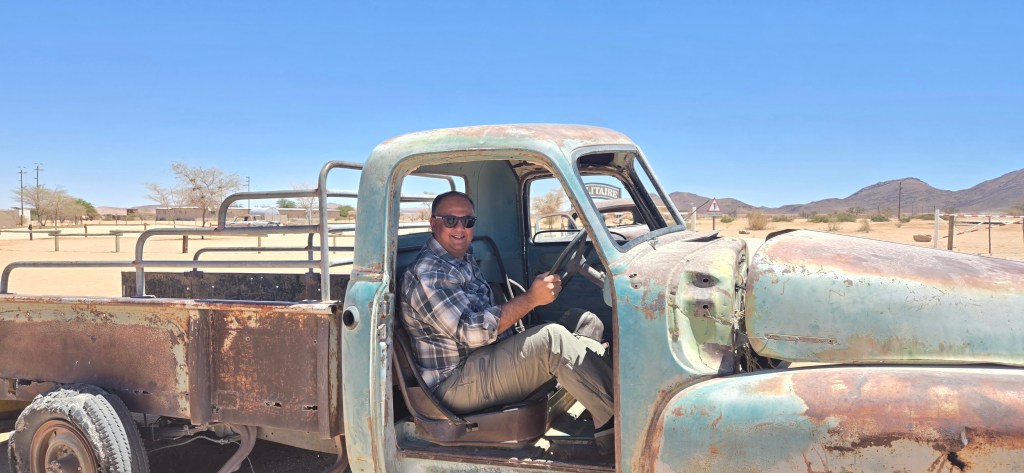
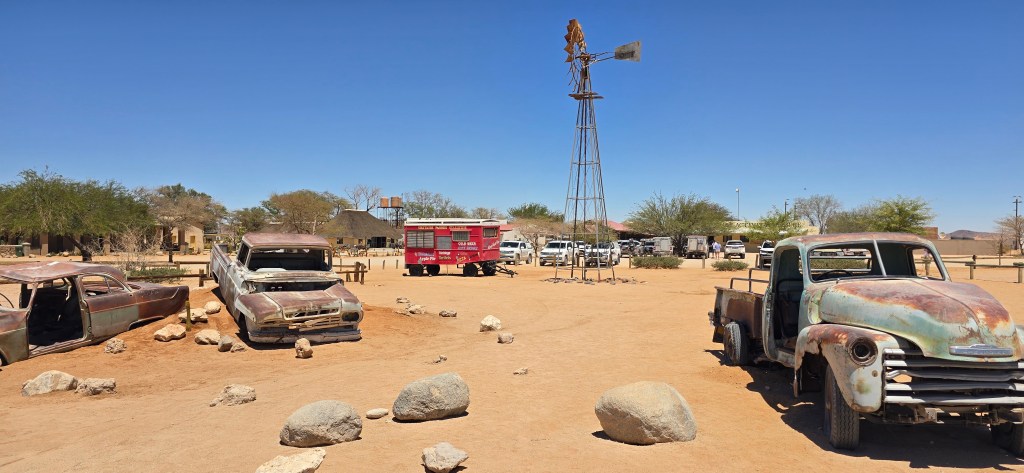
Roughly halfway through the journey, we stopped at Solitaire, a quirky outpost that has achieved near-legendary status among road trippers in Namibia. Calling it a “town” is generous—it’s really just a gas station, a small bakery, and a tire repair shop, but in a place where services are scarce, Solitaire is a vital pit stop. We refueled both our SUV and ourselves—grabbing some baked goods (the apple crumble here is apparently famous) and stretching our legs before continuing north.

Encounters with the Unexpected
Just as we were leaving Solitaire, we spotted something unusual on the road ahead. As we got closer, we realized it was a man on a bicycle, riding in the opposite direction, alone, under the blazing sun, on a gravel track in the middle of the desert. It was surreal.
Roughly 50 miles later, we encountered another cyclist. This time we stopped to chat. He introduced himself as Dr. Sam, a physician from London currently between jobs. His adventure? Cycling across Africa, from Nairobi to Cape Town, over six months, camping along the way.
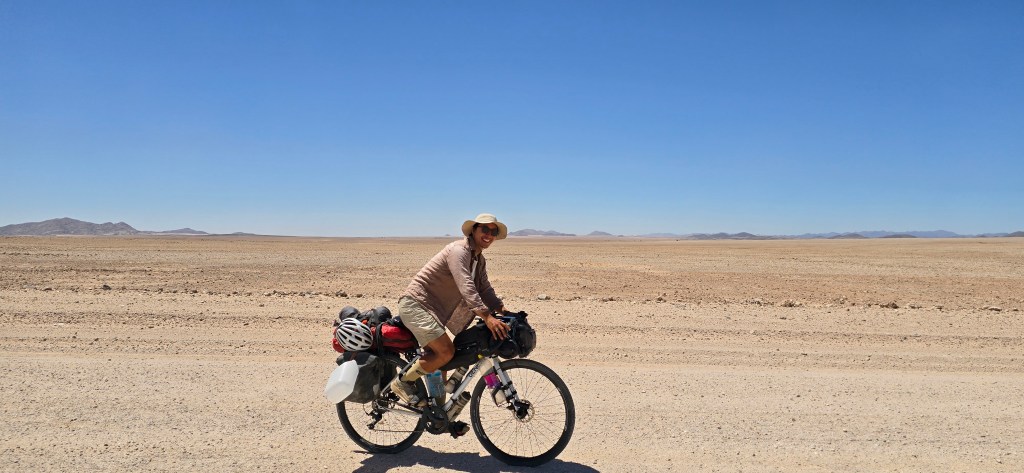
He had picked up second-hand gear on eBay and was doing 50–100 miles per day, depending on terrain. That day, he had run out of water. We gladly shared what we had. His story was inspiring—a reminder of the different ways people explore and connect with the continent.
Arrival at Walvis Bay
In the late afternoon, we descended from the desert plateau and saw signs of civilization re-emerge as we neared Walvis Bay, Namibia’s largest port. The city has strong German colonial influences, evident in its architecture and street names, a legacy of Namibia’s past as German South West Africa.
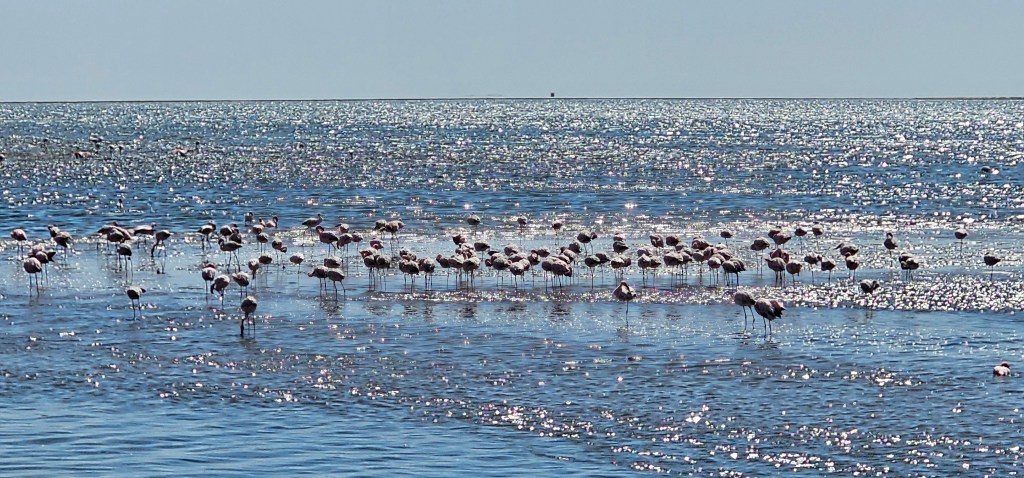
We made a quick stop at the Walvis Bay Lagoon, a well-known spot for flamingo sightings. As the sun dipped low, hundreds of flamingos waded in the shallows, silhouetted against a pastel sky—a perfect, relaxing scenery in stark contrast to the desert left behind.
Evening in Swakopmund
We reached Swakopmund just before nightfall and checked into our hotel—perfectly located right on the Atlantic Ocean. Some of us tuned into the latest F1 race (great internet connection), while others opted for a well-earned nap.
Dinner was at Blue Grass, a stylish local restaurant. The food was delicious, and we were treated to a lively performance of local song and dance, a great cultural touch to end the evening.
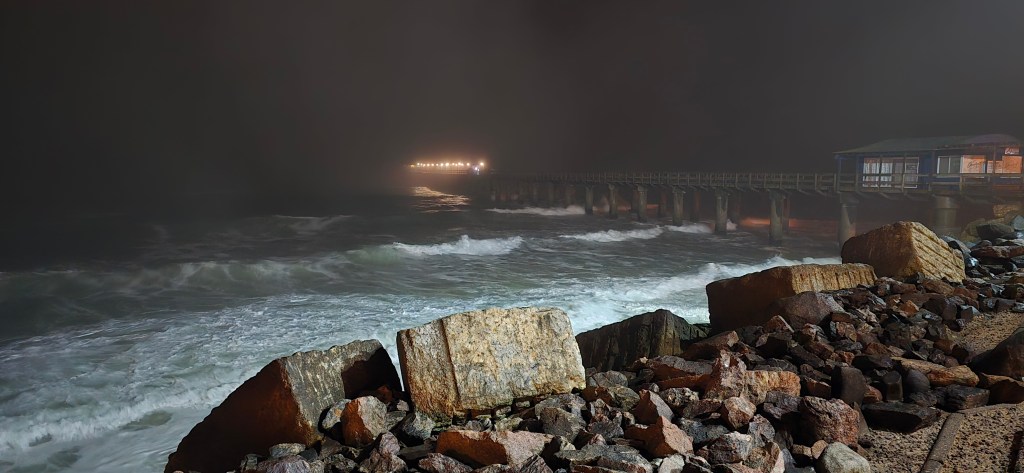
Later, Nausherwan and I went for a nighttime stroll to the historic Swakopmund Jetty, first built in 1905 during German rule. The Atlantic fog had rolled in, shrouding the coastline in a dense mist that made everything feel dreamlike.
This same fog, thick and unforgiving, is part of what makes this coastline so treacherous. Dozens of shipwrecks lie along the nearby Skeleton Coast, victims of poor visibility and rough seas. Walking along the pier, with the waves crashing below and the fog swirling around us, was an eerie yet poetic moment to reflect on how wild and beautiful this country truly is.
 The Travel Chapters