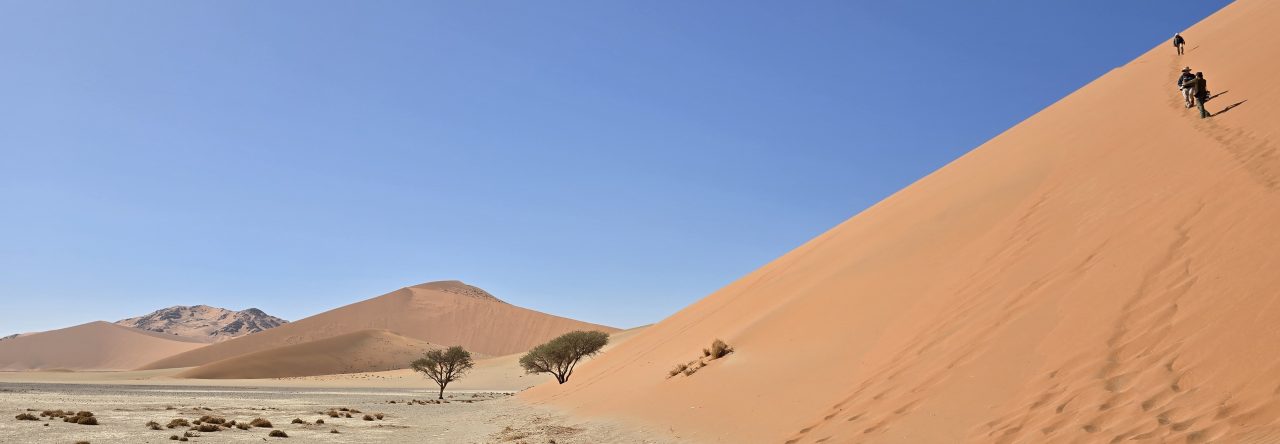
We started the day early—5:00 AM, before the first light broke the horizon. The gates to Namib-Naukluft National Park open at 6:30 AM, and if you want to explore the desert on foot, you have to start early. The heat builds quickly, and once the sun is directly overhead, the sand turns scorching and the light becomes harsh.
The drive into the park was spectacular. We were immediately surrounded by towering red sand dunes, some of the tallest in the world. The morning sun was just rising behind them, casting deep, black shadows on one side of each dune—sharpening their edges and making the entire scene feel like it had been painted in high contrast.
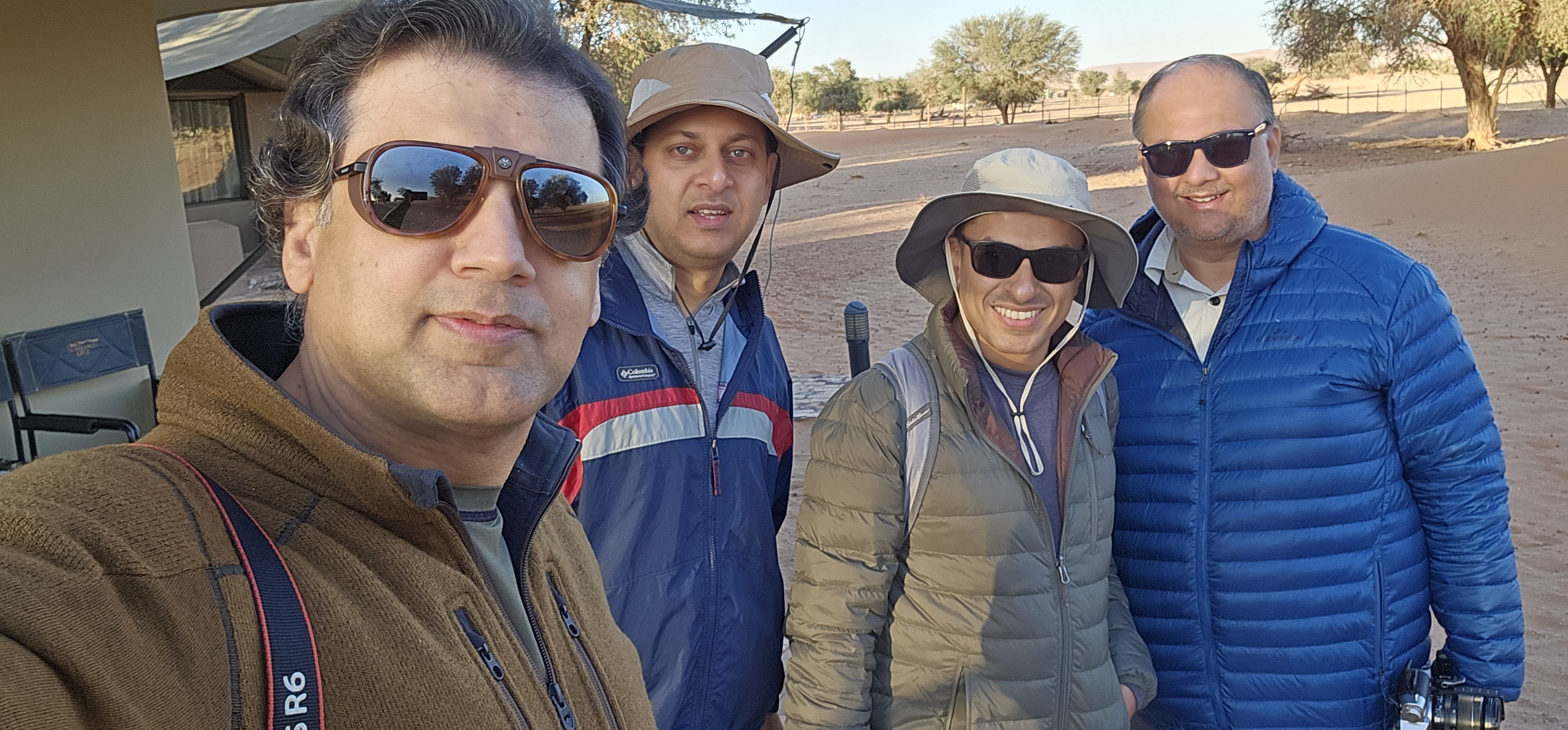
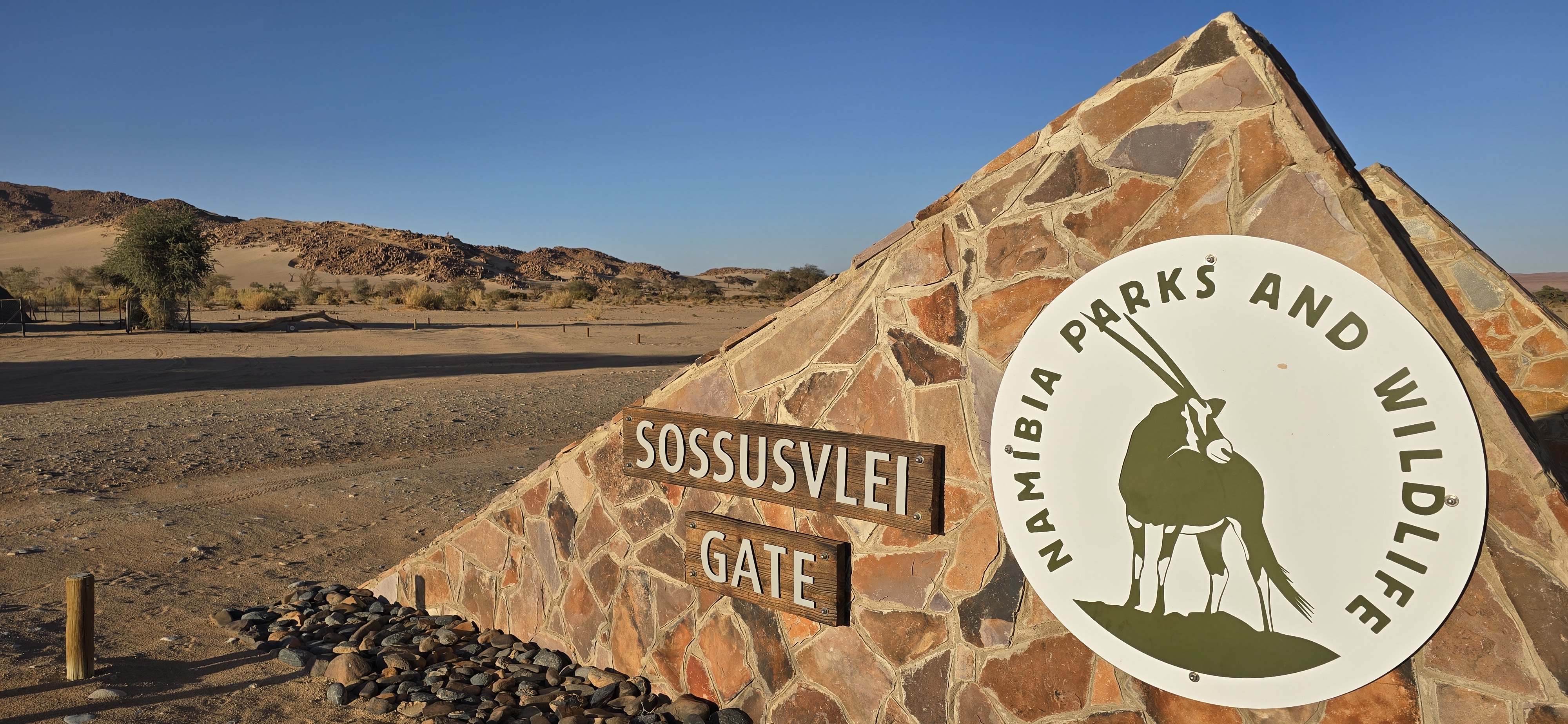


These dunes, often reaching heights of up to 1,000 feet, were formed over millions of years. They began as sand particles carried by the wind from the Atlantic Ocean, which is surprisingly close—just 50-100 miles (80-160 km) away. The Namib Desert, which is believed to be the oldest desert in the world, has been sculpted by the ocean’s winds and the dry, arid conditions for over 50 million years.
As the wind blows from the sea, it deposits these sand particles across the desert floor, slowly forming these towering dunes. The red color is due to the iron content in the sand, which rusts over time when exposed to the harsh sun and wind. This combination of oceanic proximity and wind patterns creates some of the most striking desert landscapes anywhere.
Every few miles, we’d spot a gemsbok (oryx) quietly crossing the horizon—graceful, alert, and completely at home in this harsh, arid world. Seeing them roam freely across the sand felt like a reminder of just how adapted life can be, even in the most unforgiving places.
And then the silence. The vastness. The feeling that we had left Earth entirely and arrived somewhere else—somewhere timeless, ancient, and untouched. No people, no towns, just miles of dunes rising and falling in perfect rhythm.
It’s hard to put into words how small you feel in a place like this—and how beautiful that can be.
Climbing Dune 45
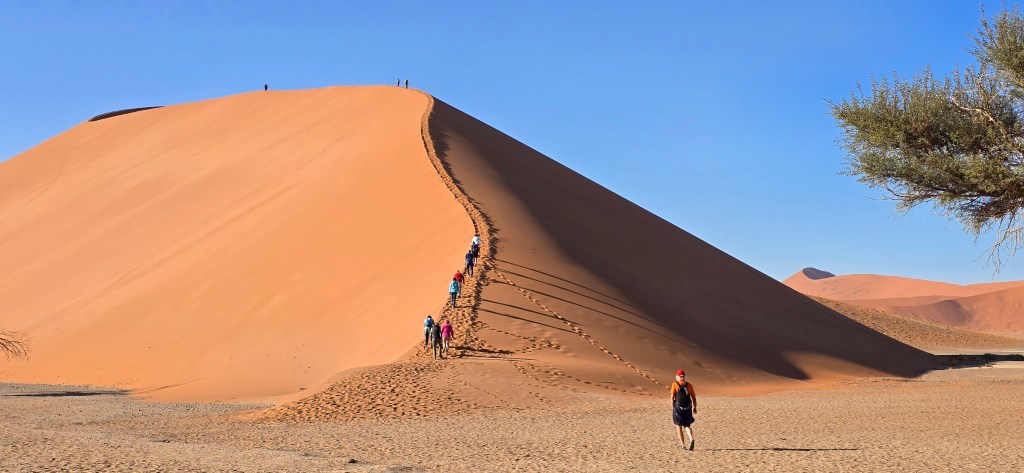
Our first stop in the Namib Desert was Dune 45, one of the most famous dunes in the world. This towering giant rises 45 meters (148 feet) above the surrounding sand, offering spectacular views of the surrounding landscape. From the peak, we could see the endless stretch of red dunes in all directions—shifting sand in every hue of orange, red, and gold.
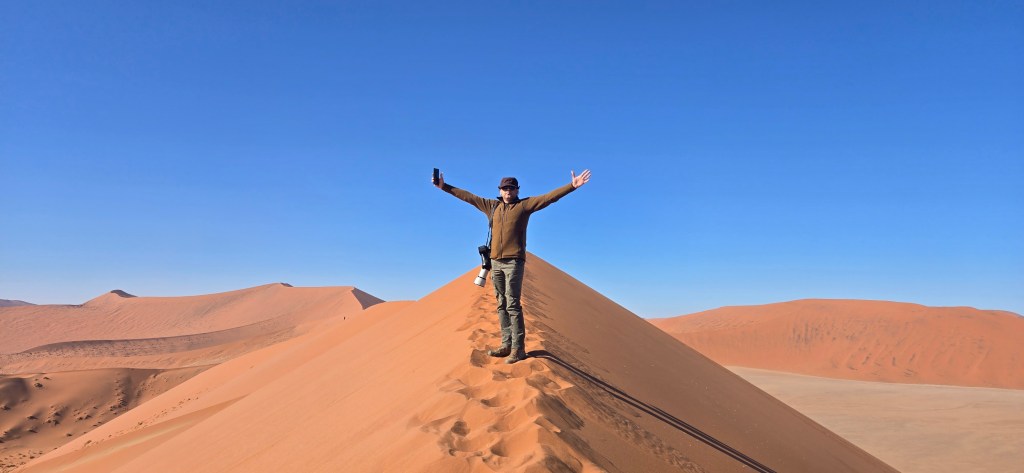
We decided to climb it, knowing it would be a challenge. The deep, soft sand made the climb tougher than expected, with each step sinking beneath us. The effort was intense, and the higher we climbed, the more I felt the burn in my legs. But as we reached the top, it was all worth it.
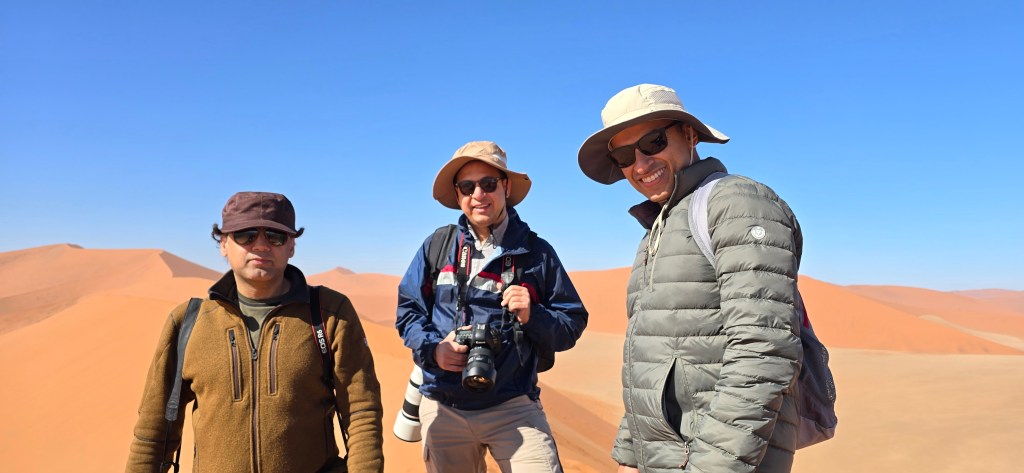
Standing at the peak, we had the entire place to ourselves, and it felt like the world had paused just for us. The serenity of the moment was overwhelming. The sheer vastness of the land stretched as far as the eye could see, and I felt small, yet incredibly connected to the earth beneath my feet.
The air was cool, the wind was gentle, and for a few moments, I could just reflect—on the immense beauty of this planet, the endless desert, and the rare opportunity to experience it in such solitude.
It was an experience that felt like scaling a towering peak, even though I was standing atop sand. A small accomplishment in the grand, timeless desert.

The Climb Down
The descent from Dune 45 was a lot easier than the climb up, thanks to the soft sand beneath our feet. However, it still wasn’t without its challenges. As we slid down, our boots filled up with coarse sand, making each step feel like we were dragging an extra weight. The wind had picked up slightly, sending sand swirling around us, but the views of the vast desert around us more than made up for the discomfort.
On the way down, we spotted some lizards and other desert insects, scurrying across the surface of the sand. It was fascinating to see how life has found ways to survive beneath the burning heat of the desert sun. The animals here have developed incredible adaptations to thrive in such extreme conditions. Some species can bury themselves deep into the sand to escape the intense heat during the day, while others are able to extract moisture from the air.
It was a rare sight, and it made me appreciate even more how this land, while harsh and unforgiving, still sustains life in the most unexpected ways.

Exploring DeadVlei
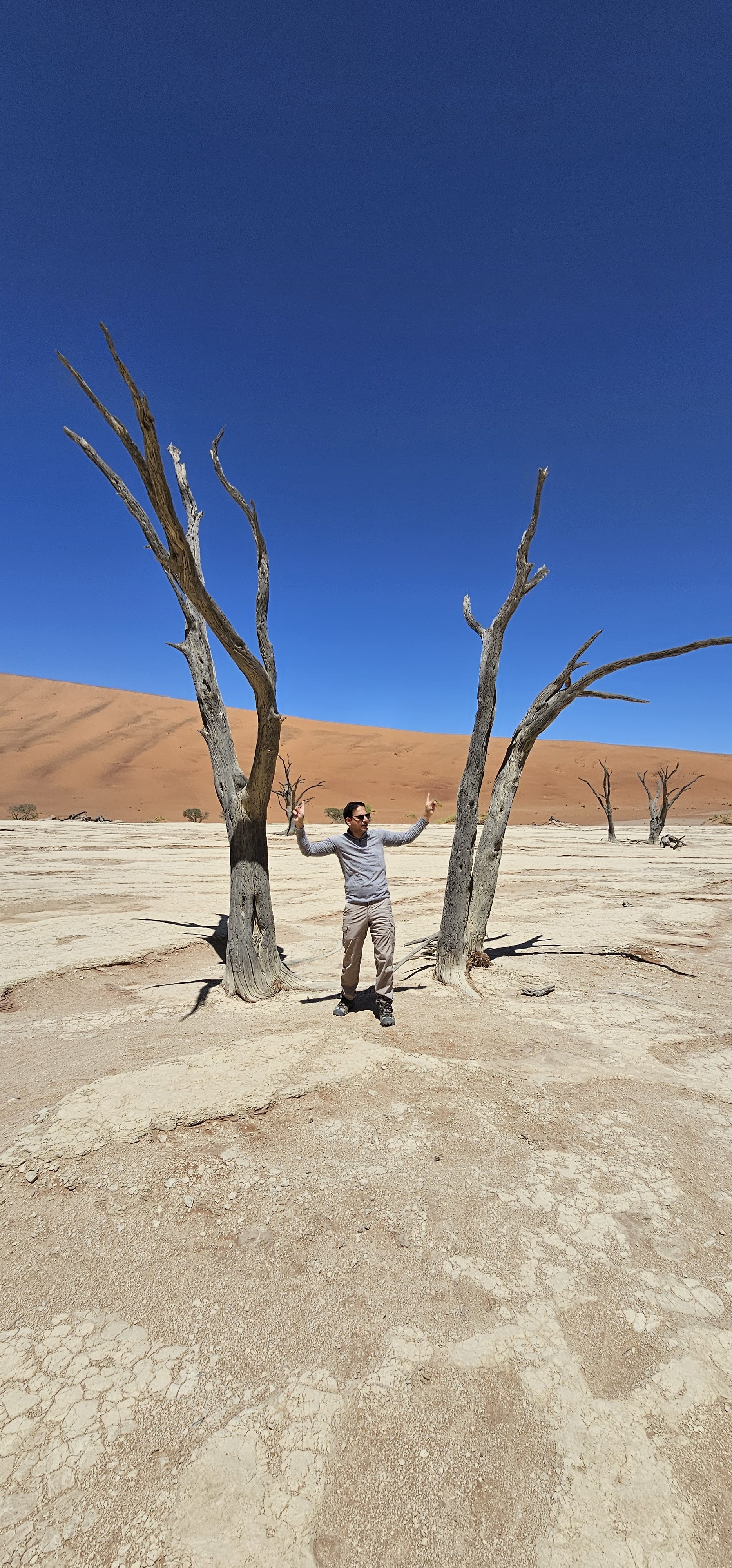
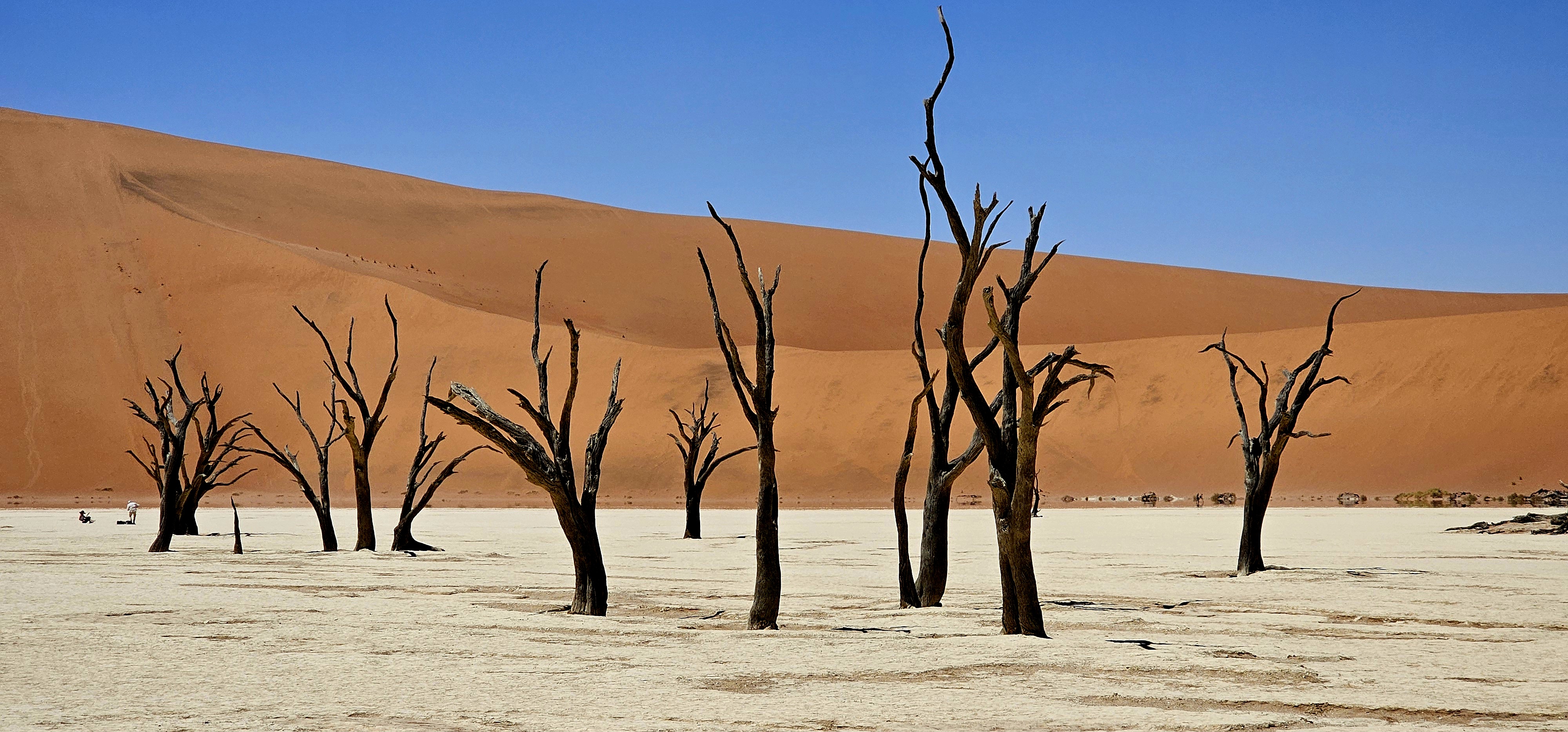
After leaving Dune 45, we took the 10 miles (15 km) drive to DeadVlei, a spot that has become iconic for its otherworldly appearance. DeadVlei—meaning “dead marsh”—is a white clay pan surrounded by the red sand dunes, creating a stark contrast that is unlike anything I’ve ever seen before.
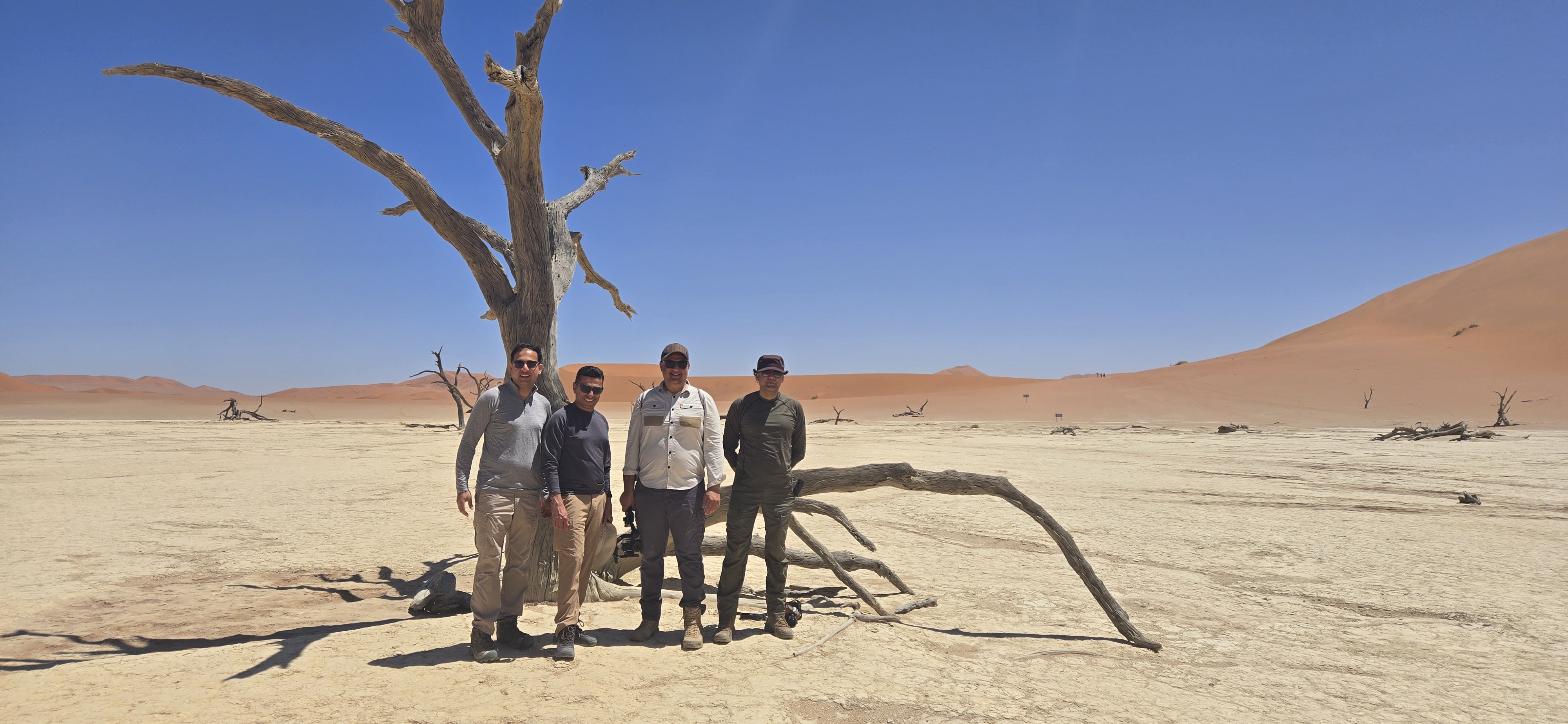
The area was once a lush, wetland. However, due to climate change and the shifting of water sources, the trees, some of which are 900 years old, were slowly killed by drought. The bones of these ancient camel thorn trees now stand in eerie silhouettes against the bright white pan. The vivid contrast between the crisp white clay and the fiery red dunes around it feels surreal.
The contrast of colors here is mesmerizing—the deep red of the dunes, the bright white of the pan, and the blackened trees that still stand as silent reminders of what once was. This landscape feels like it’s from another world, a place untouched by time, and the feeling of standing there is almost like being on the edge of the Earth itself.
As the sun climbed higher and the day began to heat up, the tour buses started leaving. This is one of the reasons why we chose to self-drive. We had the entire place to ourselves, and that made the experience even more magical. Here, on the edge of the world, we stood surrounded by millions of years of history, feeling the immense power of nature that has shaped this desert for eons.
I spent the next hour capturing photos and videos. Honestly, it never seemed like enough time. I could have spent the entire day here, just absorbing the vastness of this place.

The Big Daddy Dune
Overlooking DeadVlei is the Big Daddy Dune—the largest dune in the region, and one of the tallest in the world. Big Daddy towers at an imposing height of over a thousand feet, making it a popular stop for tourists who want to experience the challenge of scaling one of the world’s tallest dunes.
While most visitors choose to climb Big Daddy first, we decided to skip it. By now, the desert heat had reached its peak, and we weren’t ready to tackle the climb in such sweltering conditions. Even without the climb, the view of Big Daddy was awe-inspiring, as its enormous form loomed over the landscape. It looked almost like a massive wall of sand, waiting to be conquered.
Returning to Sossusvlei Lodge
After spending some time at DeadVlei, we headed back to Sossusvlei Lodge to rest during the heat of the afternoon and cool down in the pool. These afternoon naps are essential on a trip like this. With early starts each day, resting during the hottest part of the day allows us to recharge for the evening adventures that lay ahead.

Exploring Sesriem Canyon
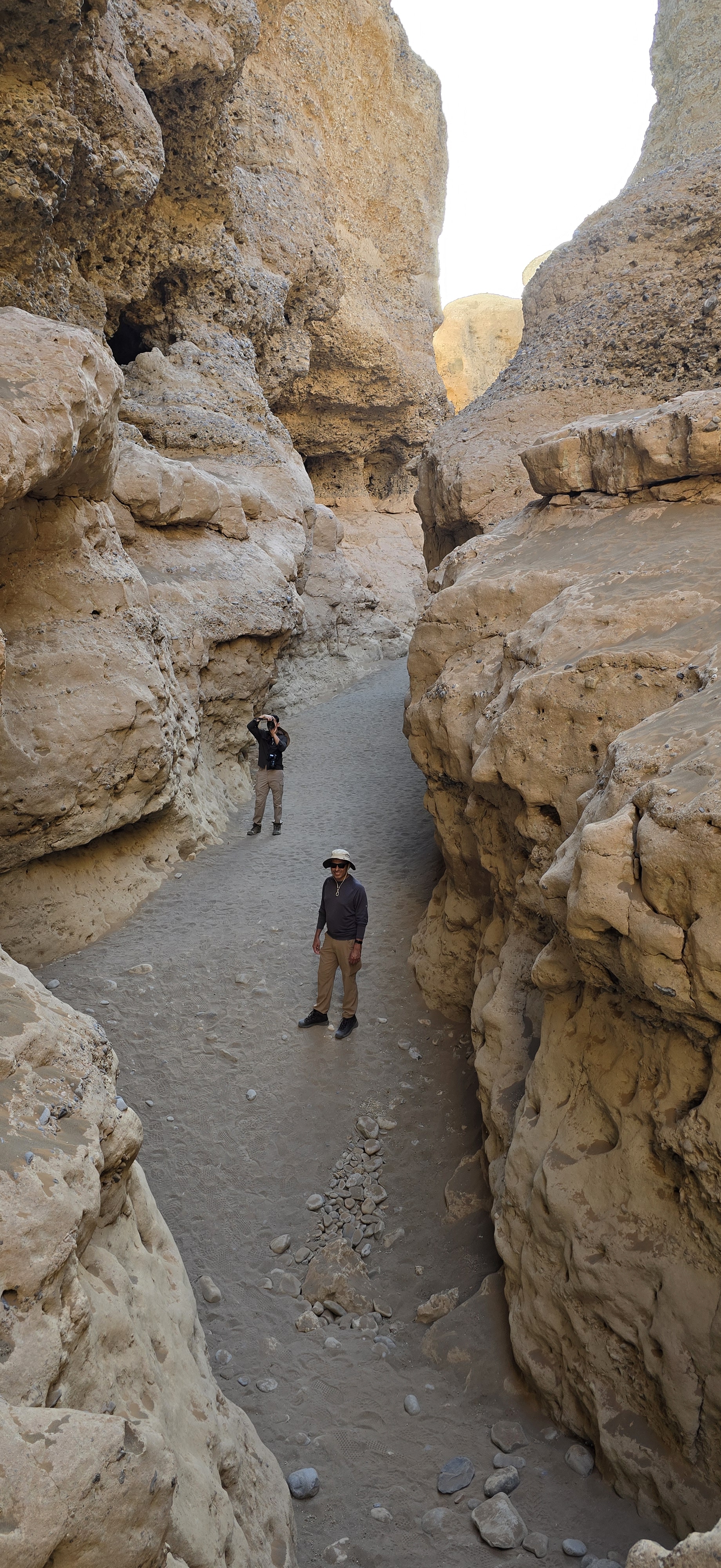
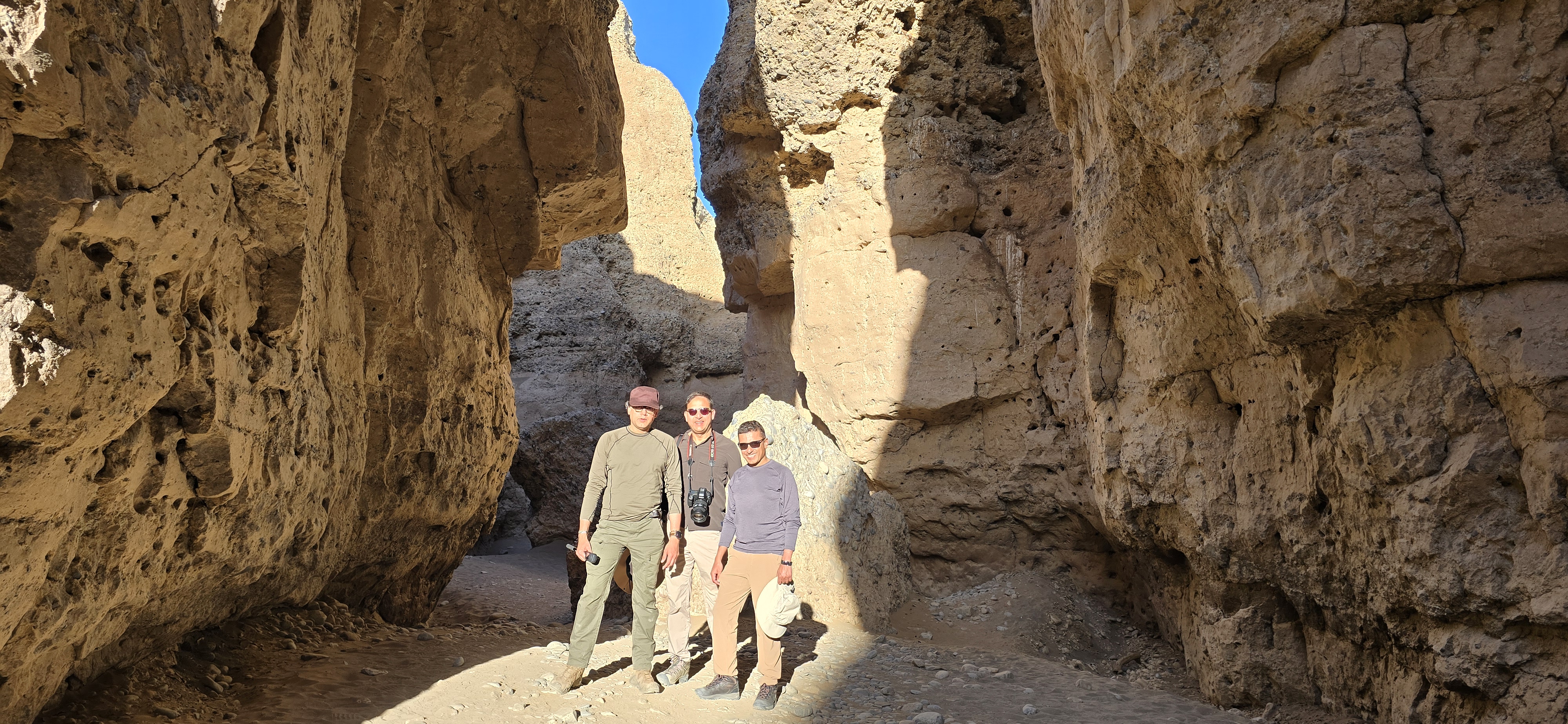
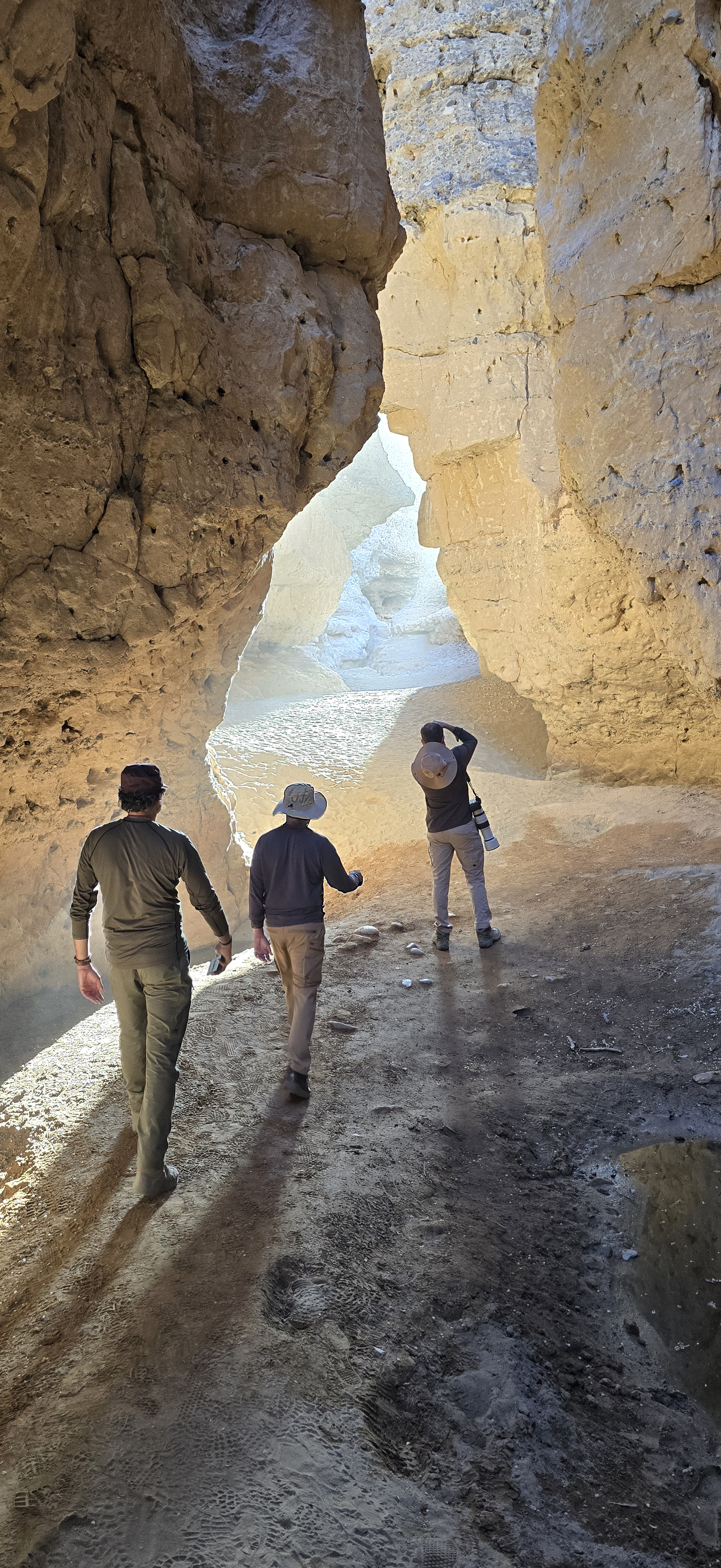
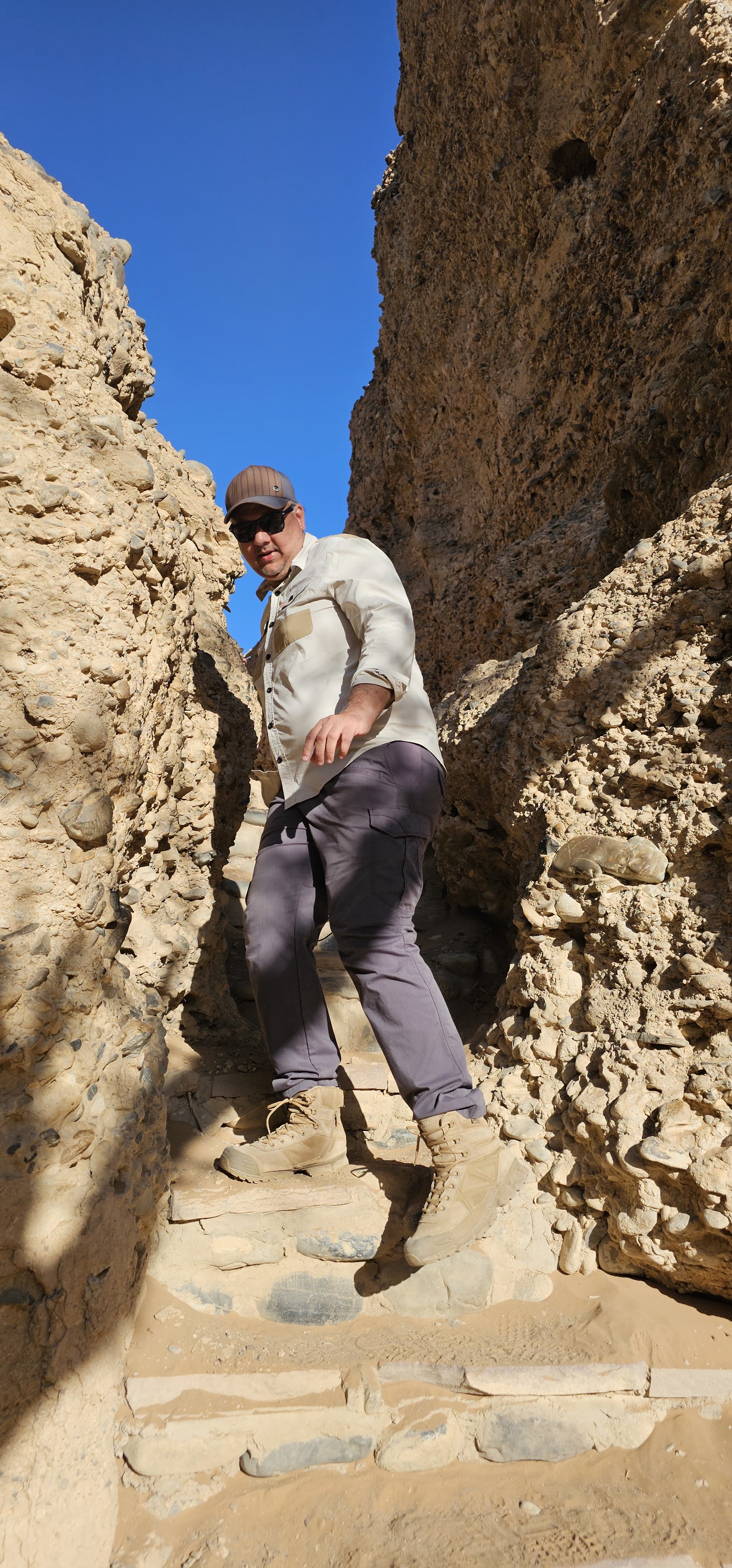
Before sunset, we made our way to the nearby Sesriem Canyon, a natural wonder that’s often overshadowed by the fame of DeadVlei and the towering dunes, but still a remarkable destination in its own right. The Sesriem Canyon is a narrow gorge carved by the Tsauchab River over thousands of years. The walk through the canyon was much easier than our previous dune climbs, thanks to the cooler temperatures that came with the setting sun. The contrast of the deep, earthy tones of the canyon walls against the fading light made it an incredibly peaceful spot to explore.
The temperatures were much more bearable now, around 80°F (27°C), making it a welcome relief after the 90°F (32°C) heat earlier in the day. The canyon is home to some wildlife, including birds and baboons. As we made our way through the narrow passages of the canyon, the distant calls of baboons echoed off the rocky walls, reminding us of the desert’s wild pulse, even in this isolated spot. It felt like walking through a natural cathedral, with the high, jagged walls towering above, shaping the landscape as they have for centuries.
The beauty of the canyon lies not just in its geological features but in the sense of age and solitude it exudes. We were surrounded by the ancient rocks, feeling like we were the only people in the world, connected to the natural rhythm of the land. There is something humbling about the experience of standing in a place shaped by forces far beyond human control.
Night Photography and the Milky Way
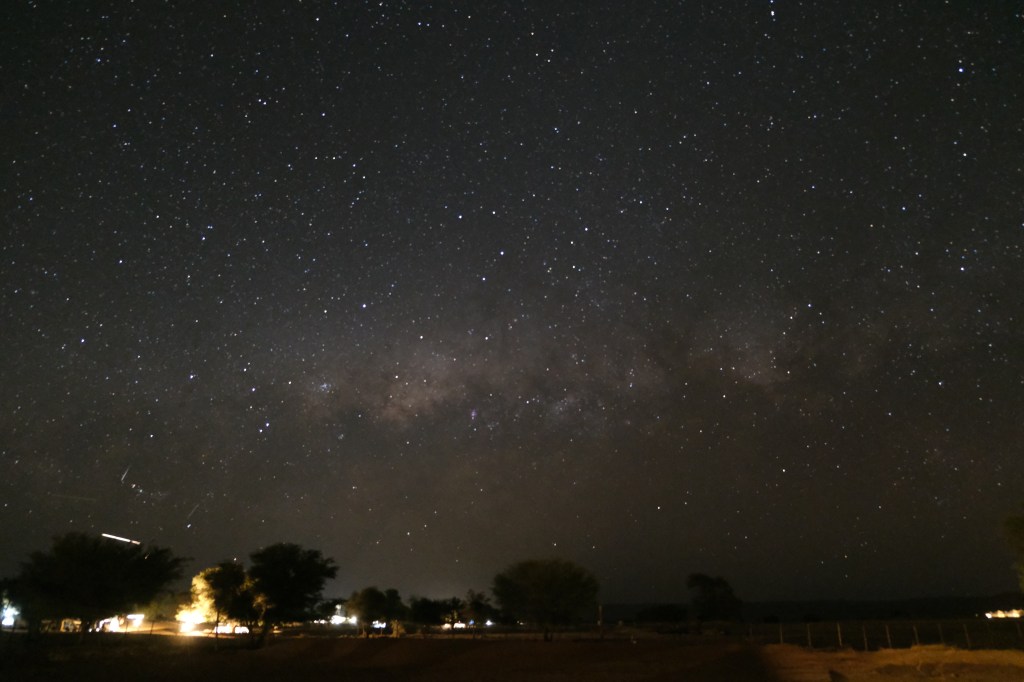
As the sun set and the stars began to emerge, I began adjusting my camera for some nighttime photography. I woke up early the next morning, at 4:00 AM, to capture the first light as the sunrise began to illuminate the desert.
The wind had calmed down a little, making it easier to get those long exposure shots. We weren’t alone this time—jackals showed up again, curiously sniffing around. We had to gently shoo them away as they got a bit too close for comfort. Standing there, with the vast desert stretching out before me and the stars above, I couldn’t help but feel small—so small—in the grand scheme of the universe. It was humbling, almost overwhelming, to think about how tiny we are in this vast system of stars. Some star formations we could see that night were only visible from the Southern Hemisphere, adding to the uniqueness of the experience.
 The Travel Chapters