The next morning, after a heavy breakfast that tried its best to slow us down, we packed up one last time and hit the road. Windhoek was calling — but not before making one final stop at a place we’d all been looking forward to: Okonjima Nature Reserve, home to the AfriCat Foundation and some of Namibia’s most incredible leopard conservation work.
Tucked into the rolling hills of central Namibia, Okonjima Lodge was the perfect finale to this epic road trip. The resort was nothing short of stunning — a blend of natural beauty and refined comfort. Our accommodations were private chalets with wide glass fronts, offering sweeping views of the bush and a feeling of complete immersion in the wild.
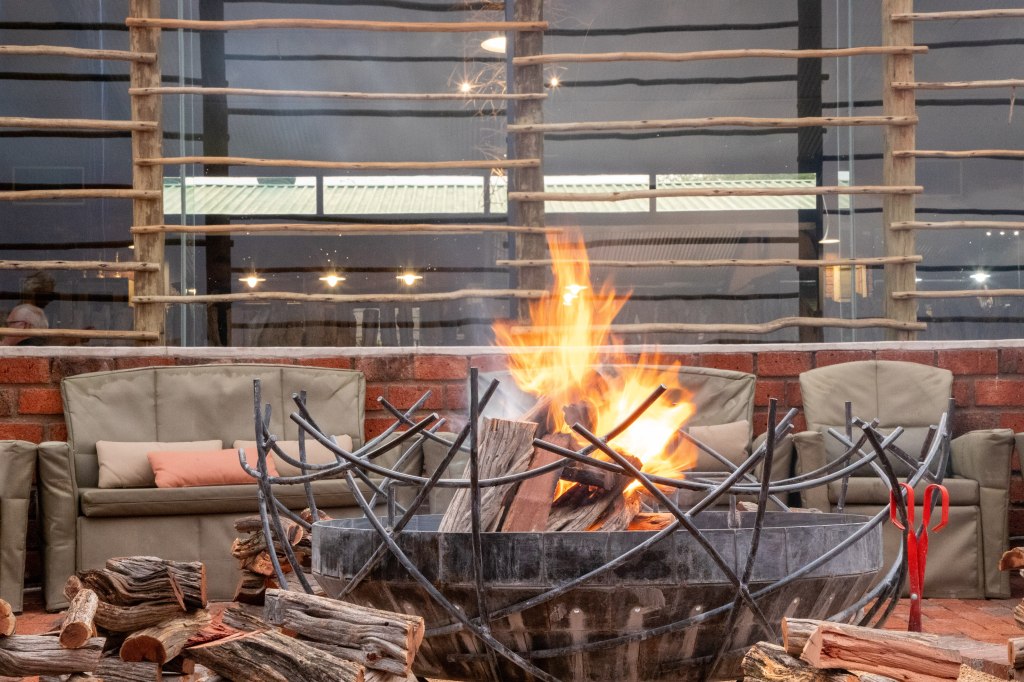
A short walk from our rooms was a central lodge area where a glowing campfire crackled in the evenings. It became our gathering spot — perfect for toasting the trip with cold drinks in hand while watching the sun dip behind the trees. In the distance, a waterhole drew in a rotating cast of characters: antelope, warthogs, and the occasional curious jackal stopping by for a drink.
There was something quiet and reverent about this place — a fitting reminder of why we came to Namibia in the first place: for the wild, the conservation, and the stories that live in the land.
The Hunt for the Elusive Leopard
After settling into our accommodations, we met Johannes, our expert guide, in the lobby for an exciting game plan: tracking one of Namibia’s most elusive predators, the leopard.
The Okonjima Reserve is home to rehabilitated leopards, each fitted with UHF collars that transmit signals, allowing rangers to track them through the vast wilderness. Armed with an antenna and a receiver, Johannes led the way, driving deeper into the sanctuary as the signal grew stronger.
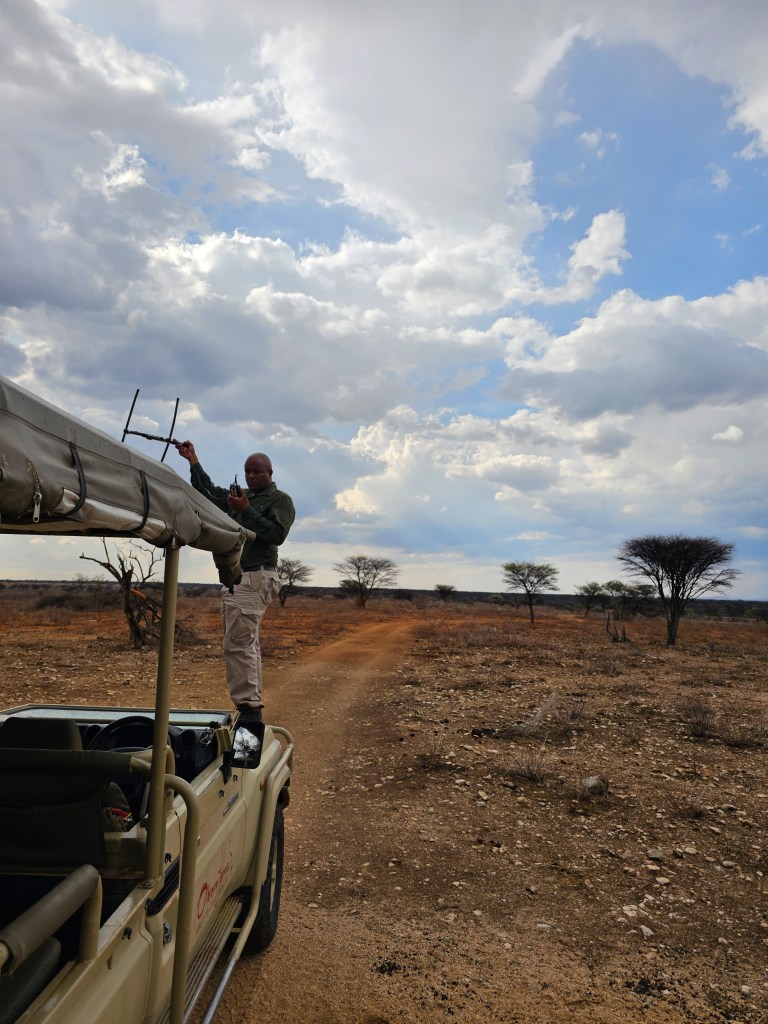
We spent an hour carefully navigating the terrain, stopping intermittently as Johannes adjusted the receiver, fine-tuning the direction. It felt like a real-life treasure hunt — the thrill of knowing that the elusive leopard could be just around the next corner.
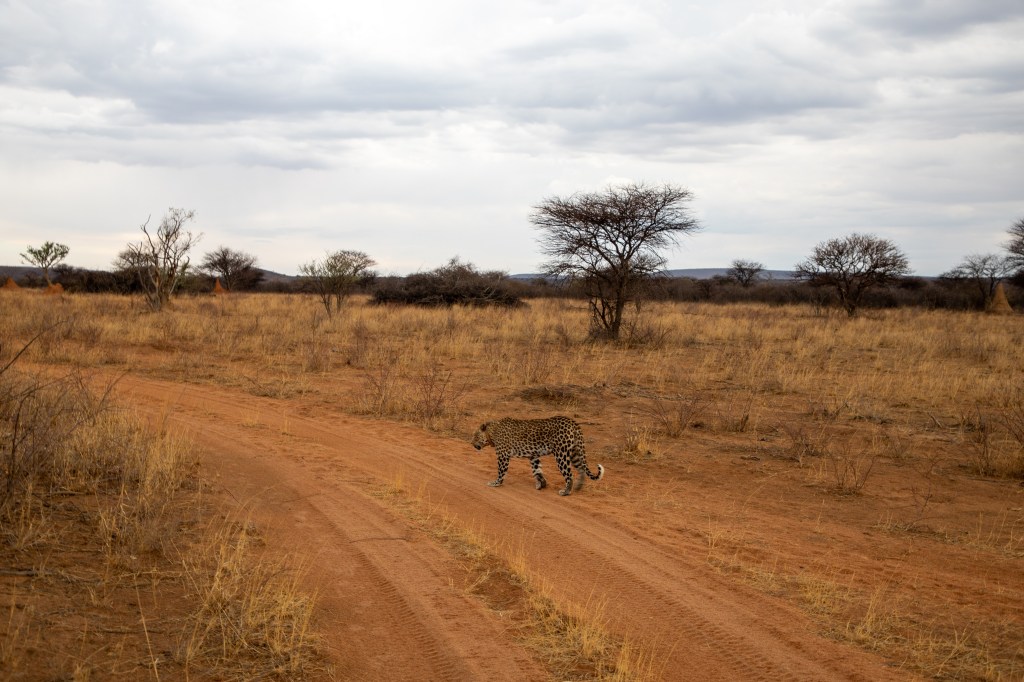
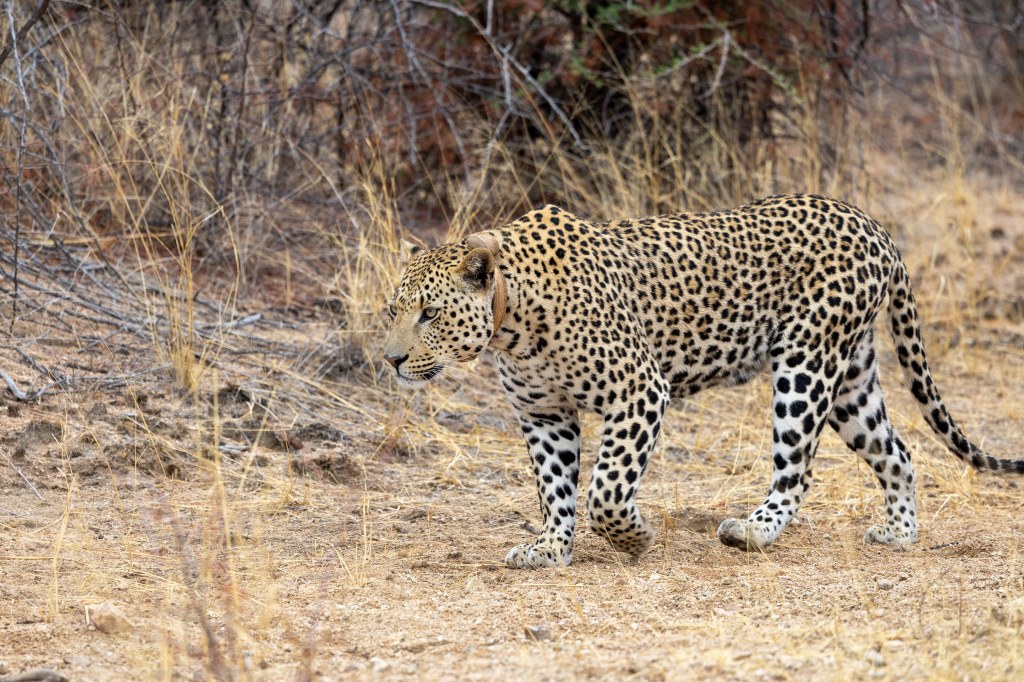
And then, there it was — a magnificent young leopard, resting beneath the shade of a thorn tree, his body almost perfectly camouflaged against the surrounding golden grasses. His piercing eyes met ours for a moment, but he remained calm and poised, his quiet presence a testament to his mastery of the wild.
We kept in close proximity to him for about an hour, quietly following behind and around him as he strolled through the bush. The young leopard was still learning the ropes of survival. It became evident when he suddenly pounced at a bird, attempting to catch it, but missing the mark. This playful attempt at hunting was a sign that he hadn’t quite perfected his skills yet, but over time, he would.
Johannes explained that, like many young leopards, this one was still in the learning phase. Soon enough, he would begin to hunt with precision and stealth, becoming the skilled predator that leopards are known for. But for now, we were lucky enough to witness a young leopard’s early days of discovery — a rare and unforgettable experience to cap off our time in Namibia.
As we continued our observation, a curious and unexpected event unfolded — an injured hyena crossed the leopard’s path. Hyenas and leopards generally don’t attack each other, as they often share the same territories without conflict. The hyena, clearly injured, raised his hair — a natural defensive mechanism — but neither animal made any move toward aggression. Instead, they both appeared curious about each other, sizing each other up for a moment before going their separate ways, each continuing on their respective paths. It was a fascinating reminder of how animals in the wild tend to navigate their space with an unspoken understanding of each other’s presence.
As we had experienced over the past few days, the rain came out of nowhere. In typical unpredictable African fashion, it started to pour just as we were observing the leopard. With no shelter in our open safari vehicle, we scrambled to cover our camera gear to protect it from the downpour. The rain continued to worsen, but just before we had to put down the plastic flaps on the sides of the vehicle to shield ourselves, we managed to capture some stunning shots of the leopard and nearby waterbucks. In the soft light, the leopard moved through the rain with several bucks grazing around him — the sight was surreal, with the rain adding a layer of drama to the moment.
Afterward, our originally planned sundowner, which was supposed to take place out in the sanctuary with a scenic view, had to be moved indoors due to the rainstorm. However, it turned out to be a perfect decision. We settled in the resort lobby, which was cozy and comfortable, offering panoramic views of the surrounding landscapes. As we sipped on our drinks, we could still hear the sounds of the African wilderness, but this time with a warm, sheltered atmosphere to enjoy it. Sometimes, the unexpected change of plans turns into a better experience than initially anticipated.


As night fell over Okonjima, the skies opened up yet again. Thunder rumbled in the distance, lightning cracked across the dark horizon, and soon a steady downpour bathed the entire landscape. What could’ve been just another peaceful bush evening turned into something utterly cinematic.
We huddled under the covered deck near the fire, drinks in hand, watching the storm light up the reserve. The waterhole shimmered under flashes of lightning, each strike revealing silhouettes of distant animals braving the rain. The sound of rain on the roof, the earthy scent of the land soaking it all in — it was a sensory overload in the best way.
It felt like nature’s grand finale. A cleansing, a celebration, and a gentle reminder that we were merely visitors in this vast, timeless wilderness.
 The Travel Chapters