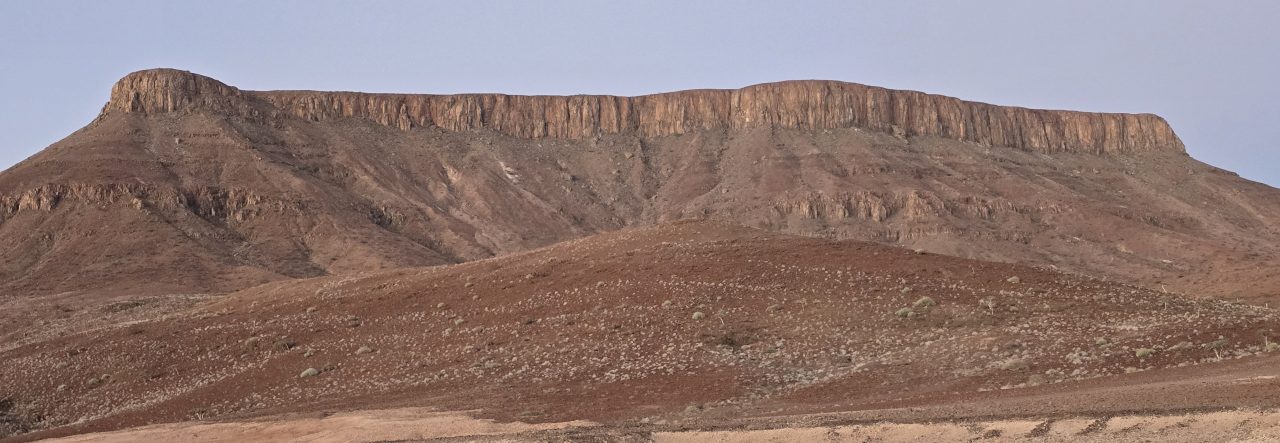
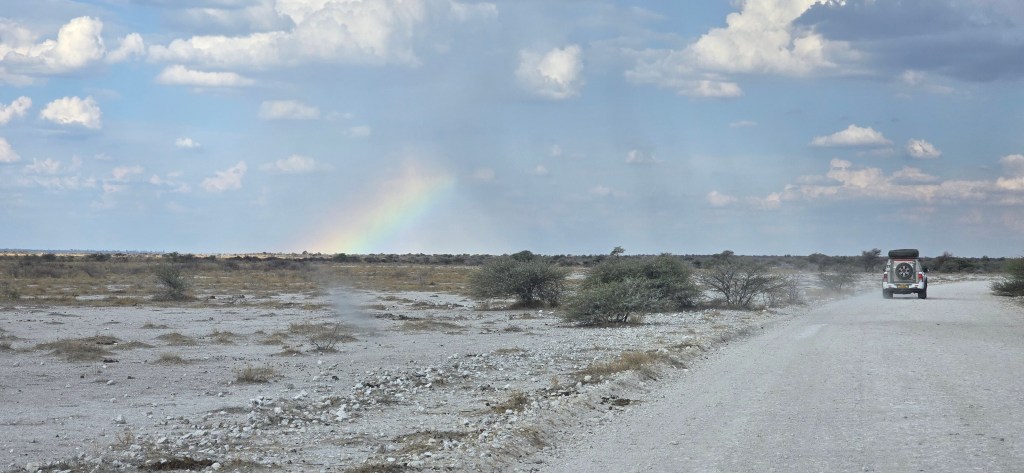
For the next two nights, we decided to change things up and moved our base to the northeast corner of Etosha National Park. We packed up our cars and hit the road, heading from Okaukuejo to Namutoni Camp. Since we were crossing the park, we made the most of it and turned the drive into a full-blown morning game drive.
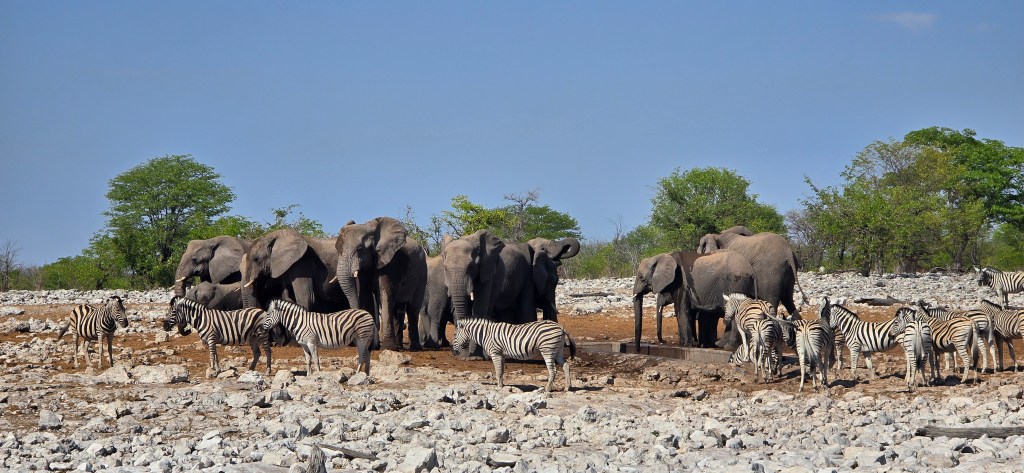
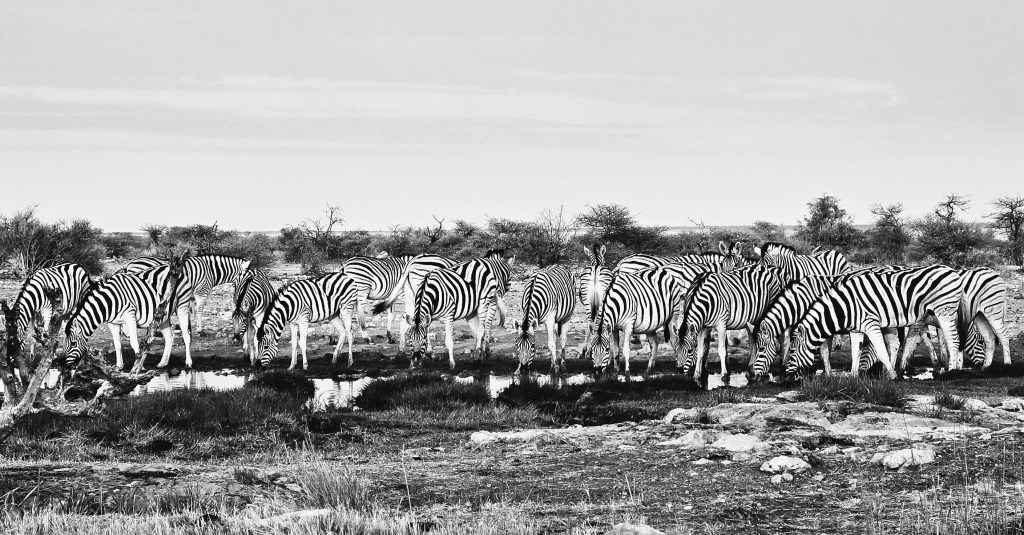
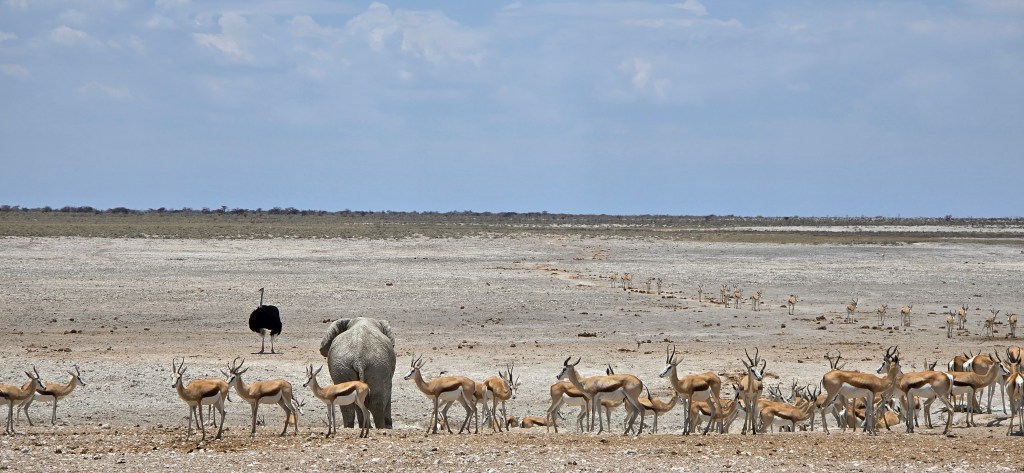
Along the way, we stopped at several waterholes which are often teeming with life, especially in the cooler morning hours. The change in temperature was a welcome shift, not just for us, but for the wildlife too. Herds of elephants marched across the open plains with an air of quiet authority, wildebeests created dust trails as they crossed from one bush to the next, and a couple of rhinos made brief appearances as if just to remind us who really runs this place. Every stop brought a new surprise, and every animal encounter made the journey across the park feel like its own unique adventure.
But the thing that truly stood out that day wasn’t a lion, or a rhino, or any animal at all—it was the Etosha Pan.
The Etosha salt pan is one of the largest in Africa, spanning over 4,800 square kilometers. In the dry season, it’s a shimmering, white void of cracked earth and mirage-like heat waves that stretch out endlessly into the horizon. The “Great White Place” didn’t disappoint, and standing on its edge, it’s easy to see why. The scale is hard to wrap your head around—this thing is so massive it’s visible from space. When the rains arrive, parts of the pan fill with shallow water, attracting thousands of flamingos and other migratory birds. But for most of the year, it remains a surreal, sun-bleached desert—silent and still, like a prehistoric lakebed frozen in time.
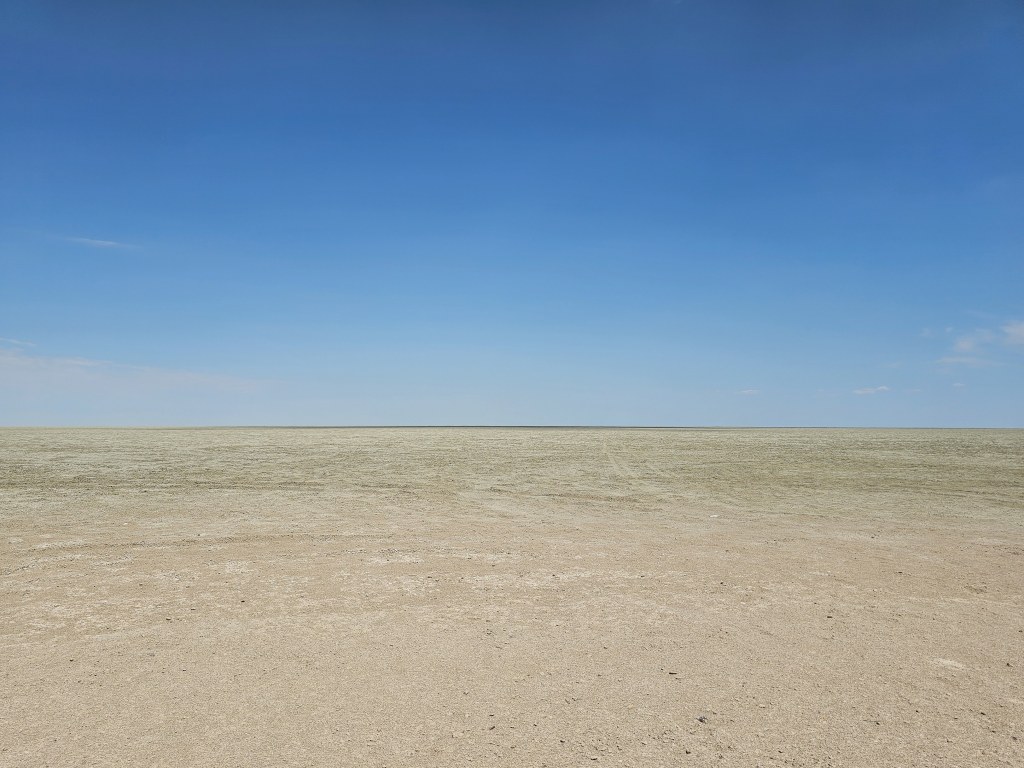
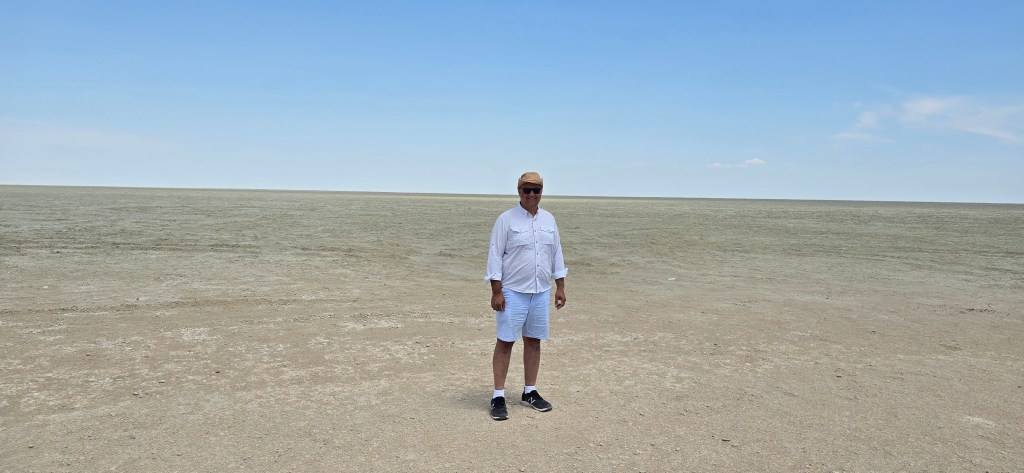
It’s not just a geographic feature—it’s a character in the story of Namibia, shaping the ecosystem around it and acting as a dramatic backdrop to some of the most unforgettable moments in the park.
Namutoni Camp
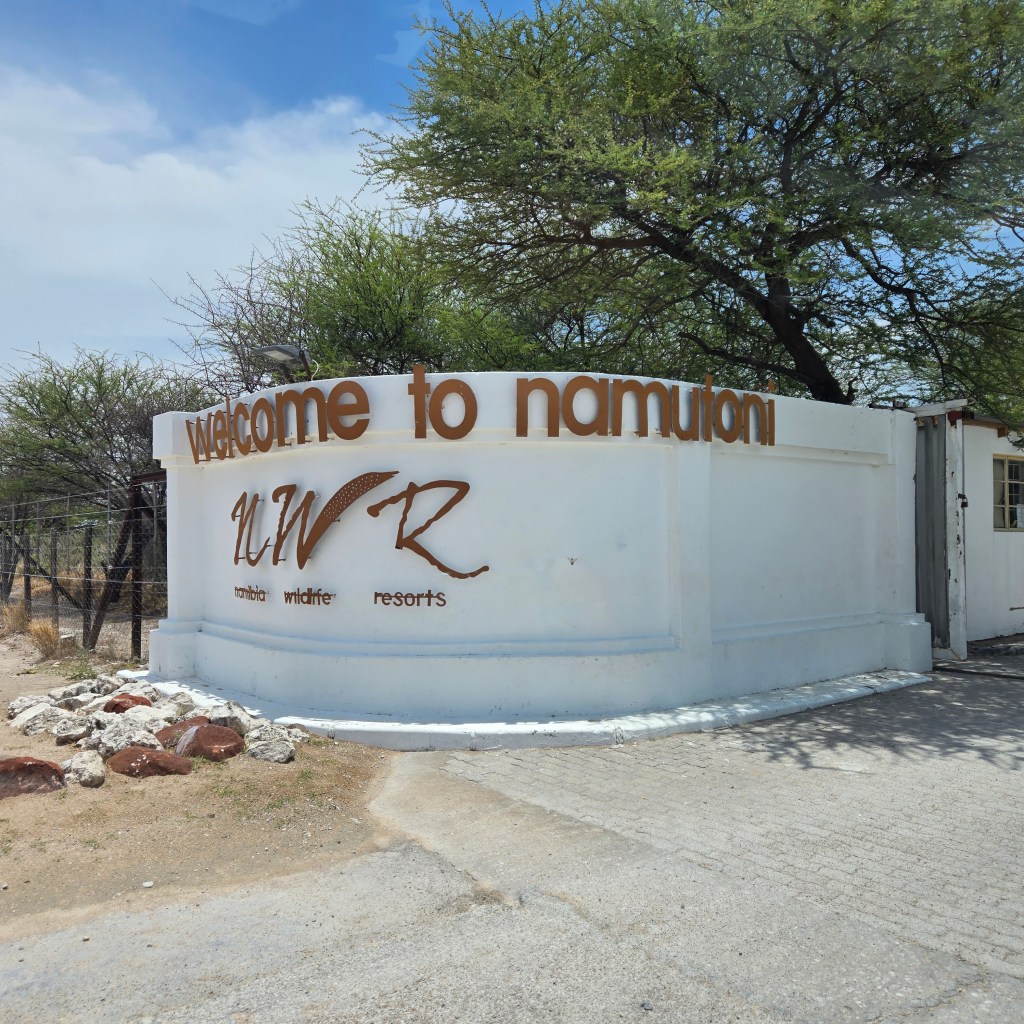
By late afternoon, we rolled into Namutoni Camp, our new base for the next two nights. Compared to the stone-and-sand tone of Okaukuejo, Namutoni feels like stepping into a small piece of history. The camp is built around a restored German fort from the early 1900s, originally established as a military outpost. White-walled and square-towered, it feels both out of place and totally fitting—like colonial history decided to leave behind a small ghost for future travelers to explore.
The fort now serves as the heart of the camp, housing a restaurant, bar, and small shop. There’s also a viewing tower that rises above the grounds and offers sweeping views across the surrounding savannah. Standing up there during golden hour is something else entirely—the soft light, the stillness, the brush stretching out endlessly—it’s easy to get lost in it.
The rooms at Namutoni were fancier than our previous camp and very comfortable. Each one came with a little patio shaded by trees, a good spot to unwind after a long drive. What stood out most was how peaceful everything felt. Even though there were other travelers around, the camp never felt crowded. In fact, it almost felt like we had the place to ourselves.
And of course, it wouldn’t be us if we didn’t make the most of every corner of the place. Nabeel scoped out photo angles from the tower, Zef figured out a late lunch plan, Nausherwan scouted for wifi to upload his pictures, and I, as usual, figured out the closest plug point to charge everything before sunset.
The stage was now set for our next few game drives in the eastern side of Etosha—an area known for its slightly higher rainfall and thicker vegetation, which meant new wildlife dynamics, new waterholes to explore, and (hopefully) some new surprises.
Evening game drive was spent looking for big cats. We saw one pride from a distance but were assured by local guides that they are more in the area.

 The Travel Chapters